

Welcome to Scenes With Simon. A monthly newsletter about many things. This month is about roads, protocol resolution, ZIRP, and plotting.
L’Enfant had a vision: 🙌~~::CROSS STREETS::~~🙌
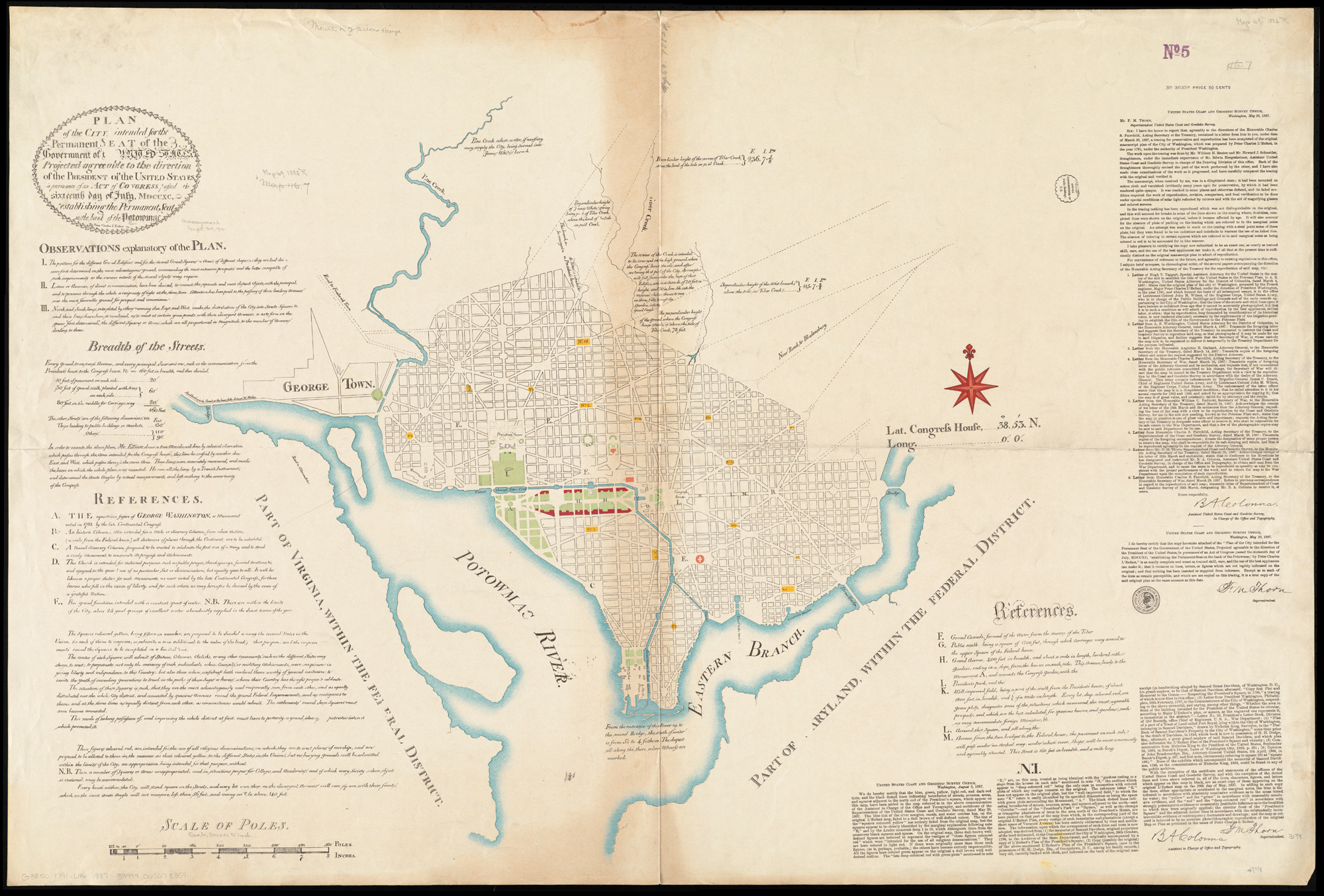
Before cars, maybe, this was a good idea for the capital city of the USA.
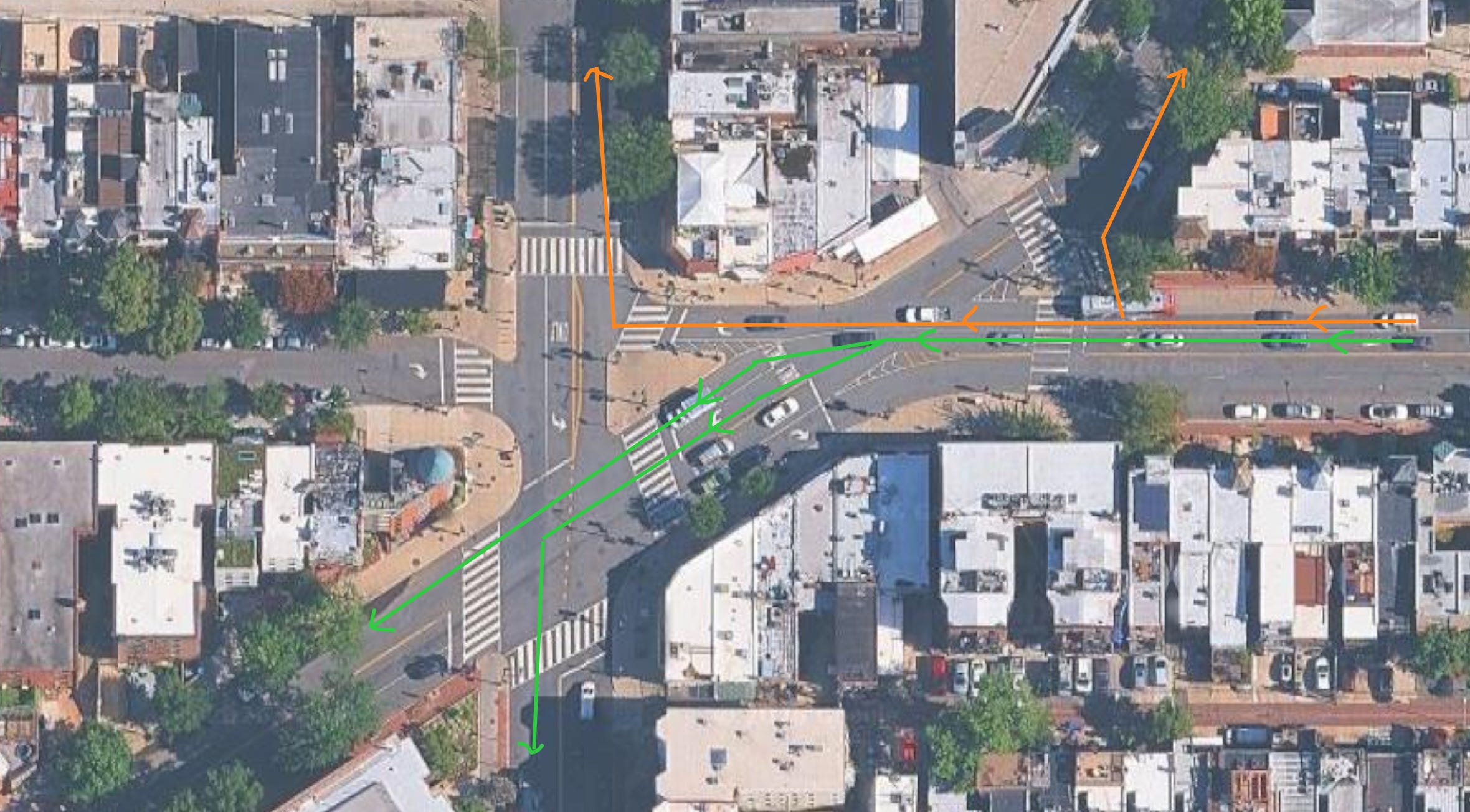
But, today, driving in DC is marred by many awkward intersections. One I’ve driven through a few times is this intersection (where Florida Ave NW meets U Street in Adams Morgan). And it’s always a bit of a pain:

If you come from the right, you have two lanes. The lane on the right can go hard right, or straight (orange line).
The lane of the left, immediately turns into two lanes. With these new lanes, one goes straight and the other goes left (green line).
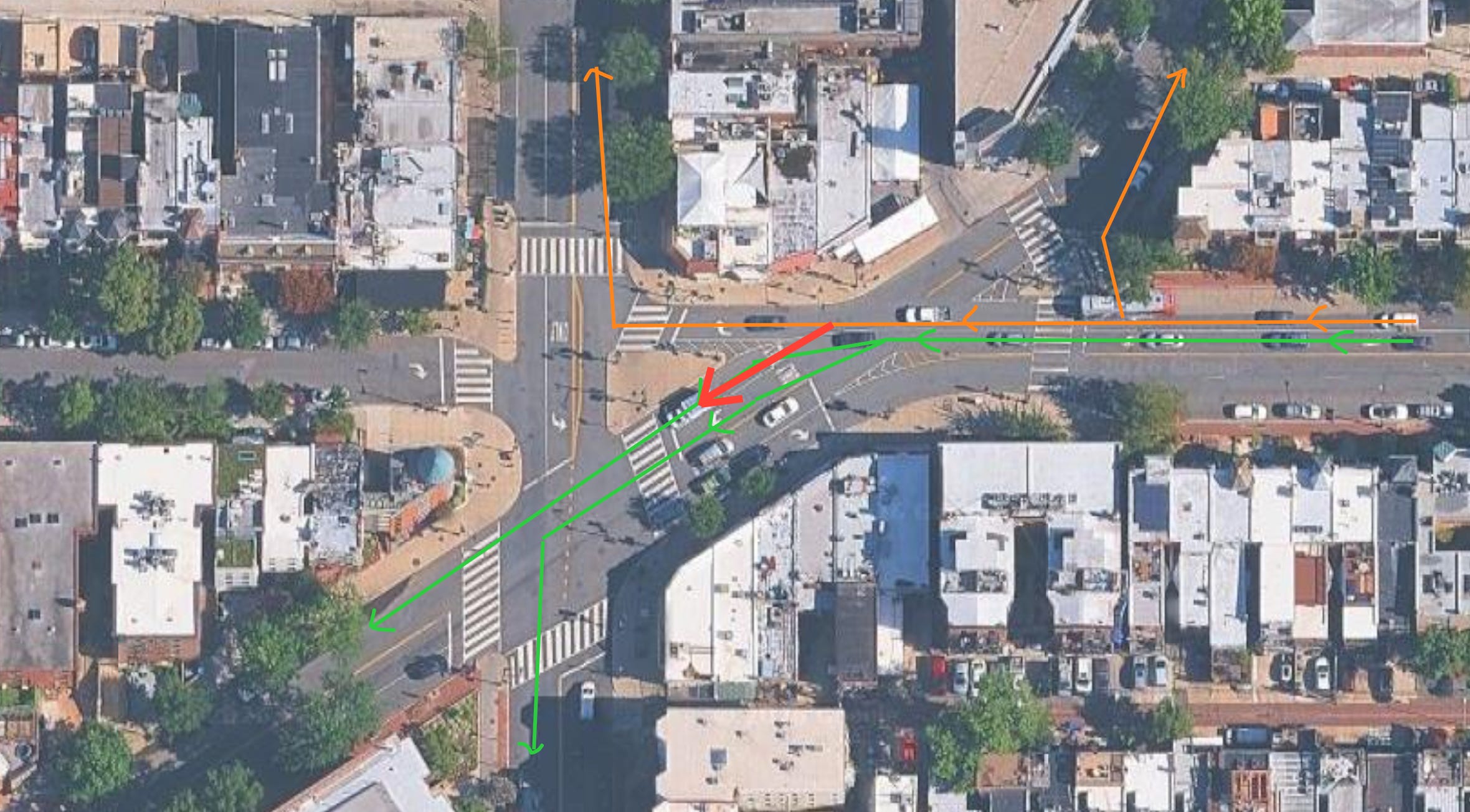
The problem is, is that sometimes, the lane on the right, believes that you can go left:
Within reason, because:
The sign for this intersection is all the way back here:
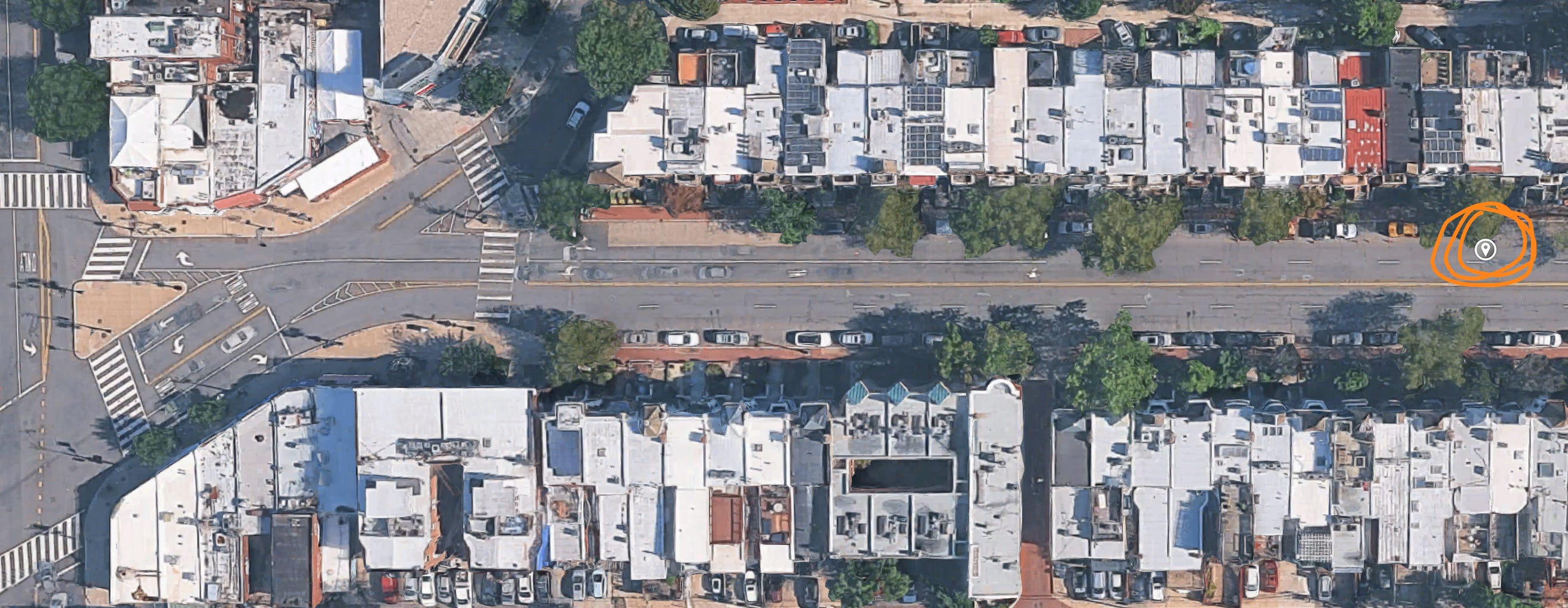

…and if there’s traffic, you don’t always spot the signs underneath. But, the real culprit is this sign on the intersection:

This sign has to do with the lanes to its left, but it looks like it might pertain to both these lanes. So, even while all the signs and lines are technically correct, it is still confusing, given that, a few times I’ve seen drivers cut in from the right into the left.
If you’ve never driven through here before, I don’t blame people for going, “wtf” and making a mistake. Driving in the US has often left me with a “wtf” as opposed to my experience driving in South Africa. This is made worse when, a place like the DMV (DC, Maryland, Virginia) has three different jurisdictions and planners. Virginia has parts with dedicated left turn lanes, for example:
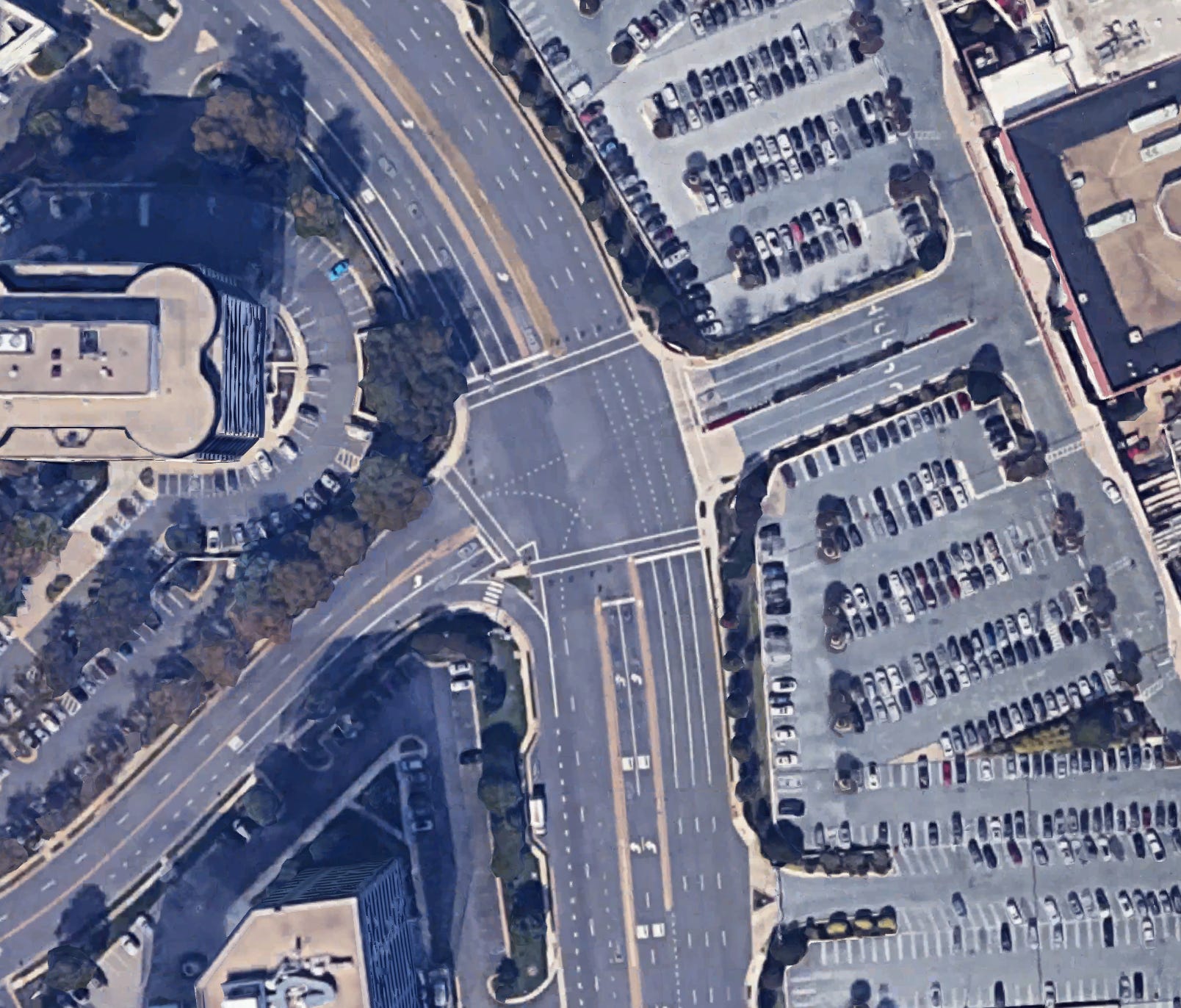
Roadway design is just far more varied in the US. South Africa has fewer road patterns and thus, more predictable.
Understandably, unique designs can lead to more efficient roadways. That’s the likely impetus. But, the more unique designs you have in a system, the more difficult it becomes to navigate, especially when it’s costly to encounter (traffic accidents). And, thus on net, you decrease the value of the system overall when you could’ve optimized for predictability instead.
The tension is thus: some composable systems that requires costs to navigate eventually gets worse if it continues to prioritize higher resolution (more patterns, details, designs, variation).
If one imagines the extremes:
a system that only comprises of unique and no repeating and predictable elements, is costly. In a roadway, it means that every road and intersection is novel and requires consistent attention to navigate. This increases errors and subsequent gridlock, resulting in a net poorer system.
a system that only has a handful of repeatable and predictable patterns/designs is not fit enough for its landscape and leaves efficiency on the table. For roadways, it might be easy to navigate, but on net, also extremely slow, gridlocked, and unusable.
Conceptually, this trade-off isn’t new. But, I find the general question, interesting: when does making a system more high resolution tilt to being a drag? And more broadly, when is it better to simply do nothing (mistaking action for productivity)?
In systems, it might look like this:
Do documentation/signs grow faster than linearly?
Are there more exceptions than rules (eg, in US roadways, how many times does one see the sign that says: “No Right On Red”)?
What is the cost to change (notoriously costly in roadways due to disruption)?
Is surplus growing?
The latter is interesting… Surplus, in general, can be valuable, but also maladaptive. If it grows, then it has a tendency to be used when sometimes the best course of action, is doing nothing.
The latter is why I believe that driving in South Africa might be easier than parts of the USA. In general, funds and expertise for roadway design and development is less in South Africa, and so, roadway design requires getting by with less. And thus, ironically, because there’s less surplus, it’s better overall.
Another way to frame this, is to look more broadly at a protocol’s resolution against its encounter costs. How detailed is it and what’s the cost when you have to engage with it? You can plot it as systems with higher/low resolution + high/low encounter costs. Roadways, ideally, should have the lowest resolution possible to avoid gridlock because its encounter costs is medium-to-high risk at failure.
These protocol examples (ideally) land in the following segments:
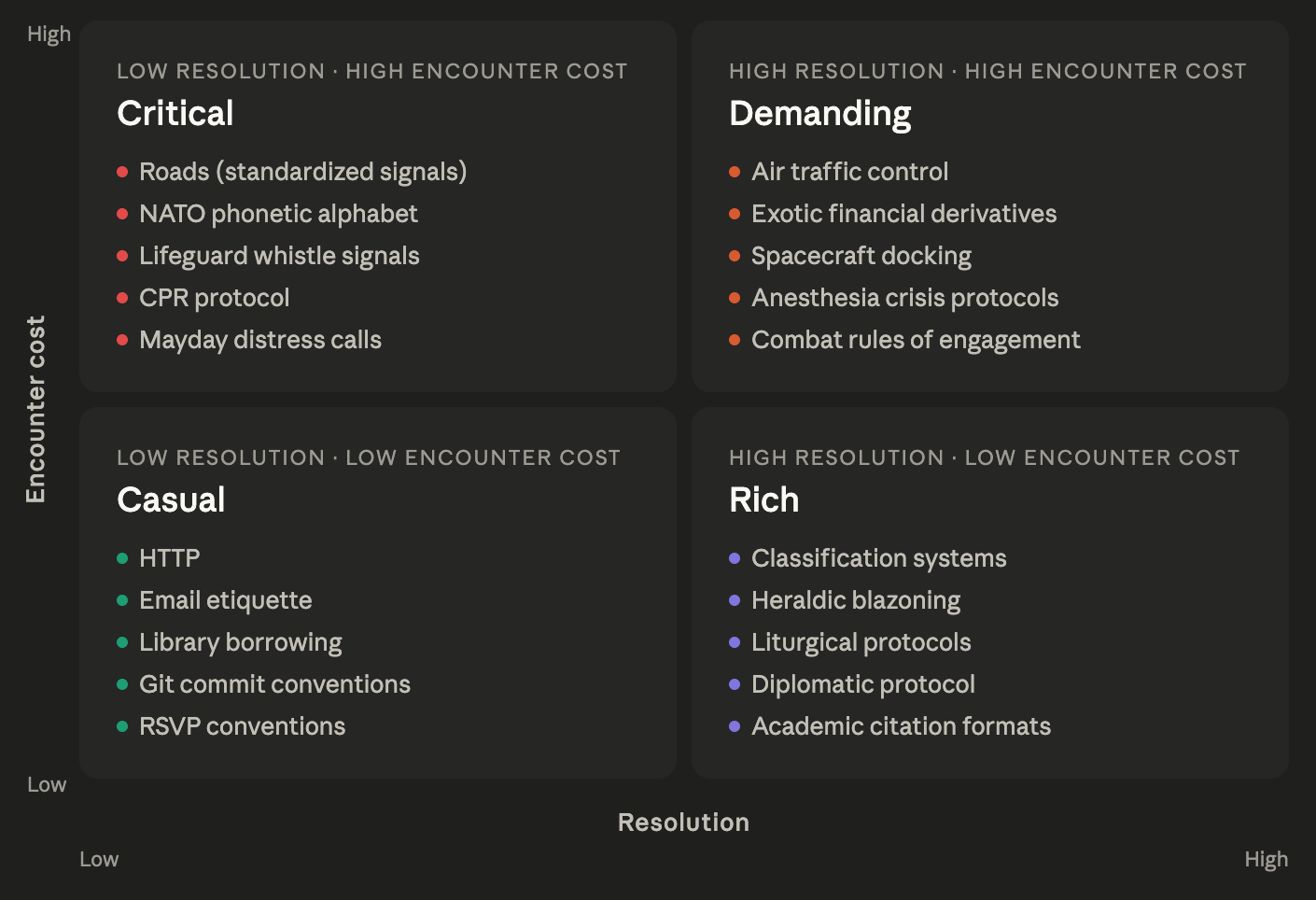
I can imagine that some protocols have a tendency to want to go higher resolution (like roadway design) and thus likely oscillate at an unstable equilibrium of increasing (more patterns) and decreasing resolution (simplification and standardization).
As I’ve been practicising meditation again, I’m often faced with the thought of: when should you do nothing? In protocol design, sometimes, doing nothing is the best course of action, but sometimes doing nothing requires justification. For example, urban planners with a budget, sometimes need to say: actually, right now, the best action is no action. But when there’s a job and a budget, it’s loaded with potential energy that’s just waiting to be released (sometimes, in the wrong way).
Life asks that of us too. When should you simply, be? I don’t know. Maybe the answer lies somewhere in the intersection where Florida Ave NW meets U Street in DC.
PS: that intersection used to be worse (~2008). 😅. Glad it’s at least a bit better.

In this April issue of Scenes by Simon, I also tackle 2 more essays, 5 snippets from the web, and what I’ve been up to!
What if it’s ZIRP, all along?
Plotting as Tools for Contextualization.
5 Snippets From The Web.
What I’ve Been Up To.
What if it’s ZIRP, All Along?
Speaking of surplus… I’m amenable to the idea that ZIRP was a contributor to social deteroriation of the 2010s (culture wars and polarization). Here’s Venkatesh Rao’s take:
The real lesson of the 2010s is not that algorithmic feeds are evil addictions sold by drug pushers through phones-as-syringes, but that free capital (zirp/nirp) can produce nonsensical business regimes.
The cost of capital should basically never be zero for anyone because the positive potential of the future is never risk free. QE is a better tool for soft-landing economic crises than whatever they had in the 30s, but it’s still a very poor one. In this case it is driving us to give algorithmic feeds a bad name and hang them.
If iPhones and web2 mechanisms hadn’t been invented in 2007, we’d have seen a different “addiction” moral panic in the 2010s. Linked to laptops or bicycles or something. The whole two-decade-long discourse confuses effects for causes. The causal path was subprime mortgage crisis —> GFC —> zirp era —> odd “free” product form factors —> addiction behaviors.
..and:
Zero or negative cost of capital is fundamentally toxic regardless of how you produce and distribute it. QE, MMT, UBI, natural resource dividend checks, sovereign fund payouts… the mechanism or politics don’t matter much. Healthy new money supply is printed as a function of non-zero-risk-adjusted expectations of positive futures, where positive and negative scenario zones of the future distribution both have nonzero weight. This cost of capital cannot be zero under such expectations unless someone somewhere is making utopian simplifications somewhere. Interest is the price of expected wrongness about the future.
So yes, it makes sense. When things are free/cheap when they shouldn’t be, it does come out in maligned ways too. And part of what we’re seeing now is a slow unwinding as interest rates return to a seeming level of “normalcy”. People returning to IRL/physical things can be because the digital world just isn’t as subsidized anymore.
But, this thesis requires two holes to poke at:
It could be both. Personally, I blame algorithmic feeds as the main culprit and phones as merely the vehicle. But, both rose during the same time and likely peaked similar times too (2020/2021 with lowest rates + turbo online pandemic). And both hit their peaks at the same time. ZIRP could’ve fueled algorithmic feeds and dominance too.
Are there counter examples?
For the latter, one can look at the following examples: Brazil + Turkey didn’t really have strong ZIRP and yet are known to struggle with polarization. And then, countries like Japan had ZIRP/low interest rates for far longer and still remain relatively not so polarized.
Sure, in today’s world, interest rates and algorithms are exported globally, but, I think my conclusion is that no, it’s not just ZIRP and not just phones.
Time will tell whether it points to one or the other, but we’ll need to look into the 2030s for that answer. Either way, regardless of the explanation for the trend, there is an unwinding happening: whether it’s post ZIRP or post peak-algo (phone addiction) or both. There’s less subsidized excess, the body as the focus of the 2020s, and people going offline.
What do you think?
Plotting as Tools for Contextualization
I’ve been enjoying Lincoln Michel’s series on plotting.
In almost any type of story, we want a sense that things are escalating. That the story is growing and getting more intense/interesting/dramatic/what have you. That it is moving along whatever axis it is operating on. You can call this the dramatic stakes if you’d like. Or perhaps simply the force that makes the reader keep reading.
Much of McKee’s advice is a bit too prescriptive for my taste, but there’s one idea related to oscillation I have found very useful and that is his conception of a “story value.” He says all stories should have a story value on which the story moves up and down. McKee says, “story values are the universal qualities of human experience that may shift from positive to negative, or negative to positive, from one moment to the next.” These values are expressed as binaries such as Freedom vs. Oppression, Love vs Loneliness (or Hate), Courage vs. Cowardice, and so on. McKee’s advice is that every scene in a movie (and perhaps every chapter in a novel) should move the character somewhat up or somewhat down this binary.
It reminded me again on this essay I wrote on what act 2’s are actually about. It’s about contextualization.
In reading more of Lincoln’s essays, I tend to lean towards seeing plot as one of the bag of tools available for contextualization. Escalation and oscillation are familiar tools to explore an idea or a theme, and under the same token, I see literary novels as using leaning more on language itself to explore a setting/vibe/feeling. Genre and plot-heavy novels are contextualization engines. Literary novels are also contextualization engines.
As I’ve been writing, I’ve become more fascinated with the form, shape, and character of stories. In some sense, it’s like going from learning the chords to a guitar to learning and understanding harmonics to discovering just intonation and microtonal frequencies. It’s all so much more richer than we could possibly imagine.
So much more to learn still.
Snippets From The Web
Suburban Urbanism?
Why don’t we see more experiments in skyscraper design like this?
The Two Memories
How do you solidify your memory? This was a really fascinating take from Sachin. Do you intensify memory by notes or by socialization? Asynchronous or synchronous.
The schism between asynchronous people and synchronous people is downstream of their preferred way of intensifying the memories of day to day life. Asynchronous people are a class that became more predominant post printing press, during the rise of what McLuhan calls visual culture. This class has more affinity for memory practices that are personal and individual, such as memory palaces, bespoke note taking methods, and other archival methods of remembering. Synchronous people remember by being constantly attuned to a larger body, something larger than themselves, such as festive experiences, intense relationships, gooning1, and other carnivalesque practices. The constant attunement intensifies memories. The former is a private and contemplative practice while the latter is a public and embodied practice.
What mode do you function on?
Pied-a-Terre Tax
My favourite tax policy is one that also improves desired allocative efficiency with minimal productive drag.
Vacancy tax is one such idea. Building owners should not be withholding productive use of a building for the neighbourhood. Tax, as a lever, can be used to incentivize what the building is there for. Ideally, that tax should go back into public improvements for that neighbourhood.
While permanent residences usually get tax benefits, making it costly to own more homes is better allocative efficiency for society on net.
Thus, I’m a big fan of NYC’s new “Pied-a-Terre” tax.
Protocol Institute
Exciting to see the folks over at Protocolized continue building the scene. I always have good intentions to get involved more, but not finding enough time. Congrats on the launch of the Protocol Institute!

Migingo Island
Utterly fascinated by this story. A true encapsulation of the modern world. A tiny island in Lake Victoria that’s in the middle a border dispute for its access to abundant fish around it.
What I’ve Been Up To
Creating:
🖼️ Art
Neolastics Refactor
Slowly, but surely using Claude Code to go through a backlog of coding tasks for my art projects. I refactored and updated Neolastics. Launched in December 2020, it’s one of the earliest onchain generative art projects and the first art project to use a bonding curve for its economy.
One cool thing. The meta tags are now generative too!
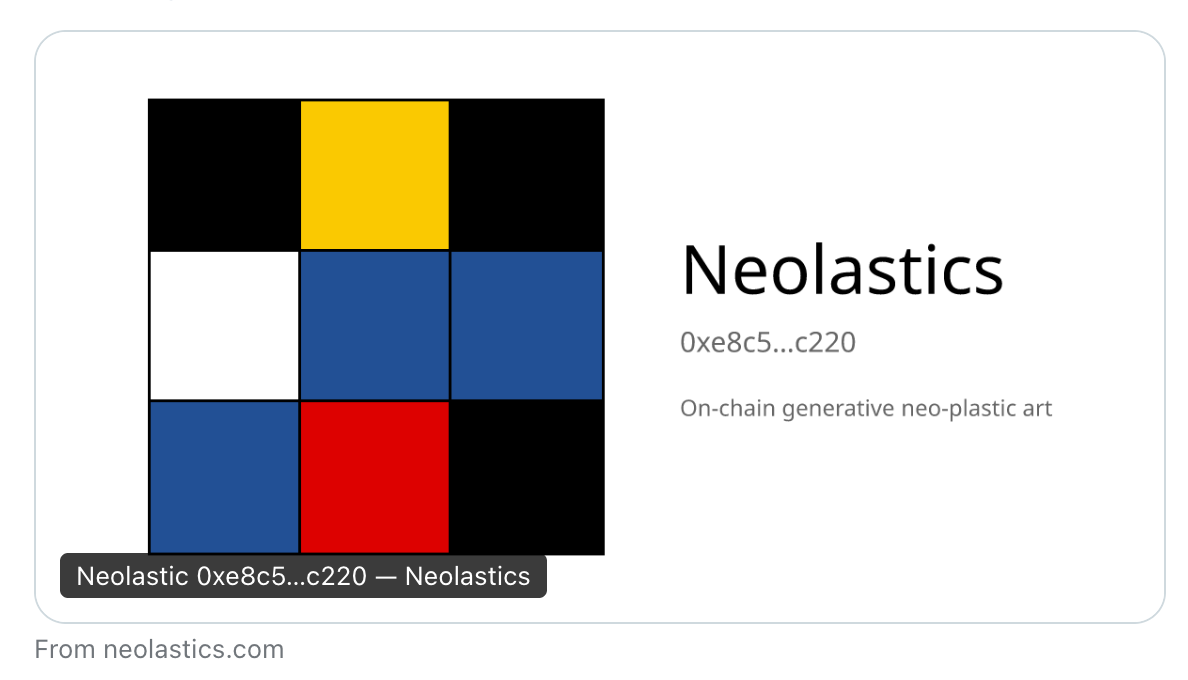
Once my novel draft is done, I hope to do more work on my art projects again. On another note: I’ve been notified by some collectors that OpenSea had delisted some of my projects (which was the main platform I used to showcase my work). Not the end of the world, but will try to fix it.
✍️ Writing
Novel #2
Busy with draft 3 and hopefully coming to an end soon. In this draft, after getting to the end of it, I cut about 10,000 words, so I’m adding some extra scenes in the first half of the book. Still feeling behind where I wanted to be, but, I’ll continue to slowly but surely make progress. Hoping to start querying for agents again by somewhere in June/July (a year later after the initial batch of querying and feedback from readers).
Consuming:
📺 Watching
Jury Duty: Company Retreat
Really enjoyed this. Having been through some utterly insane company retreats, it was great to watch this.
Fleabag
Should’ve watched this a long time ago. Very sharp writing and highly entertaining. One thing that Phoebe Waller-Bridge mentioned, and it’s apparently an oft-quoted advice, is that great comedy (or scene writing in general) always require juggling three things. Definitely food for thought on adding richness into scenes. For example, let’s say characters need to discuss something important in a restaurant. In general, you could say there’s two things happening here:
Plot movement moves forward.
Reveal character through this conflict/engagement.
But, there could be a third element that not only adds richness but entangles both plot movement and character reveal. For example, the food they order isn’t what they ordered. This makes the scene feel more real, but if this interrupt actually reveals more of the characters, it’s great. So, adding these “third” real-world elements to a story works if these extra little moments add to the richness, revelations, and plot movements. In Fleabag, there’s a great scene example of this. The main character wants to get a business loan, but it’s also a really hot day. She accidentally flashes the loan officer when she takes off her sweater.
Thus, the scene 1) moves the plot forward, 2) reveals character, and 3) adds richness (and comedy) at the same time.
Maul: Shadow Lord
The latest Maul series surprised me. The animation is amazing and wonderful, and the writing is tight and engaging. The action set pieces are great too. It kind of feels like a mix between Andor and Clone Wars! It’s unfortunately, a bit short to my liking. 8 episodes of ~25min is unusual for animation? It almost felt like it could’ve been a 2hr movie instead? Either way, it was better than expected. Looking forward to more!
[Edit: lol. I thought it ended at 8 episodes. 😅. My mistake. ]
Trust Me: The False Prophet
A harrowing, yet deeply interesting look into a religious cult in America. It was remarkable just how much footage the documentary team could get. I’m very puzzled by a person like Sam Bateman, that seems both sociopathic and extremely stupid. It’s very revealing on the different parts of human nature: our sincere desire to connect and belong against our capacity to reflect, introspect, and break free from social systems that work against our own self-interest. In a cult, it’s very clear to outsiders. But, in broader, every-day, society, to what extent are we beholden to similar forces that we aren’t aware of?
Sicario
Great thriller! Hope to continue catching up on Denis Villeneuve’s catalog.
Yesterday
A great premise and full of heart popcorn movie. Before the premise unravels too much, it lands the ending and journey well. :)
🕹 Gaming
Factorio: Space Age
Yip. Still playing. But much less in April.
Feather’s Edge Announcement
Some good friends announced their latest game. It’s been to have a little bit of a peak inside its development over time. So much work going into this! A tactical metroidvania! Enjoy the trailer and make sure to wishlist on Steam!
🏃 Running
Ran a 10 mile race with near-perfect race conditions! Got a PB! 1:26:34. Quite happy with that. 🥳
Taking a bit of a break for now. Running for the fun of it.
📚 Reading
I started reading Intermezzo by Sally Rooney, but I just haven’t been in the mood to tackle a book like this atm. Coupled with wanting to write more + a not-so regular routine this month, reading has been slow. Might want to switch to something easier.
🎶 Listening
James Blake - Make Something Up
My favourite track from the new James Blake album.
Avalon Emerson - God Damn (Finito)
I remain a huge fan of Avalon Emerson: mixing both indie/dreampop music while also doing techno.
Jaguar Sun - It’s Kind
Warm song.
Moby - Porcelain (Arty Remix)
(ht to R for this one)!
That’s all for April friends! Hope you all got the chance to see a lovely sunset.
See you next month,
Simon
Like what I write? Please consider becoming a patron below ($5/month):
OR: Buy a copy of my self-published debut novel and leave a review!
Love a Simon urbanism post. Intersection design also has some stigmergy/path dependence I think. Remember reading something about how inner roads in Tokyo have jagged intersections in lot of parts because each side of the intersection was developed by a different authority at different points of time.
I also had a similar thought about encounter cost wrt traffic but the 2x2 I came up with was consequences preserved vs hidden and risk aware vs hidden. risk aware kind of being the higher resolution solution but like you said too much of that is also not a good thing https://summerlightning.substack.com/p/manufactured-present