Welcome to Scenes With Simon. A monthly newsletter about many things. This month is about Venice, Art, and Protocol Art.
I love art. Reality can be arranged in so many ways, and the power of art is to ask us to pay deeper attention to reality’s many forms. Art is an attempt to continuously contextualize anew: from cave paintings to Duchamp’s urinals. To not just see the world at face value. When all these attempts at new droplets of contextualizations are gathered together (say, in an exhibition), we might come to see an ocean. In that, we might see where the currents of culture, the world, and ourselves will be swept along to.
What better way to ponder our times than visiting the grandest of art shows: the Venice Biennale? Every 2 years, for a few months, the ancient city is home to plenty pavilions and palazzo’s of art.
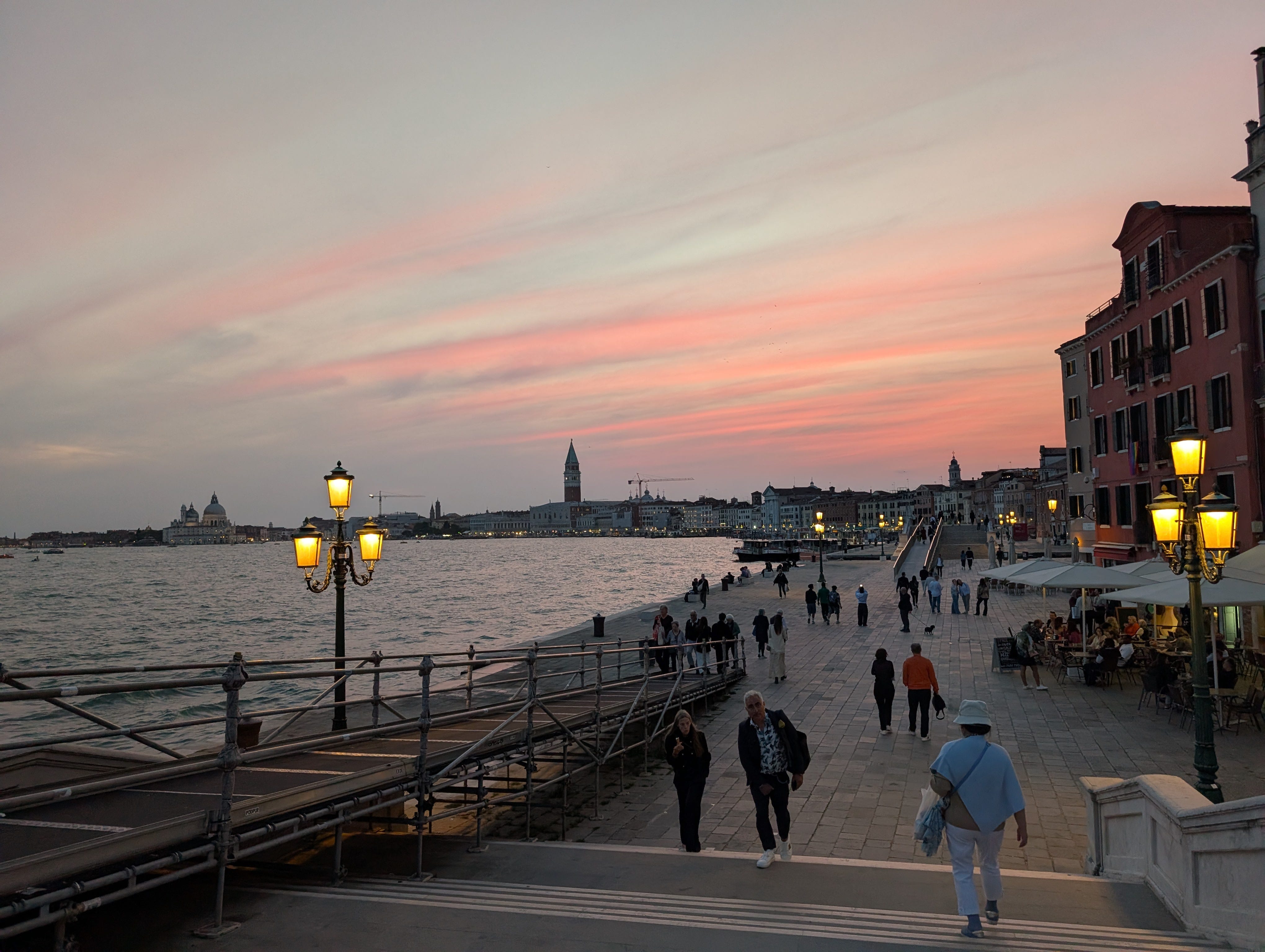
For a few days, I walked through its exhibitions, hoping to catch and understand the swell and the tide, but when I left Venice, I felt confused like muck stirred up from the ocean floor. Only days later, after pondering the experience, I realised that my confusion, was apt.
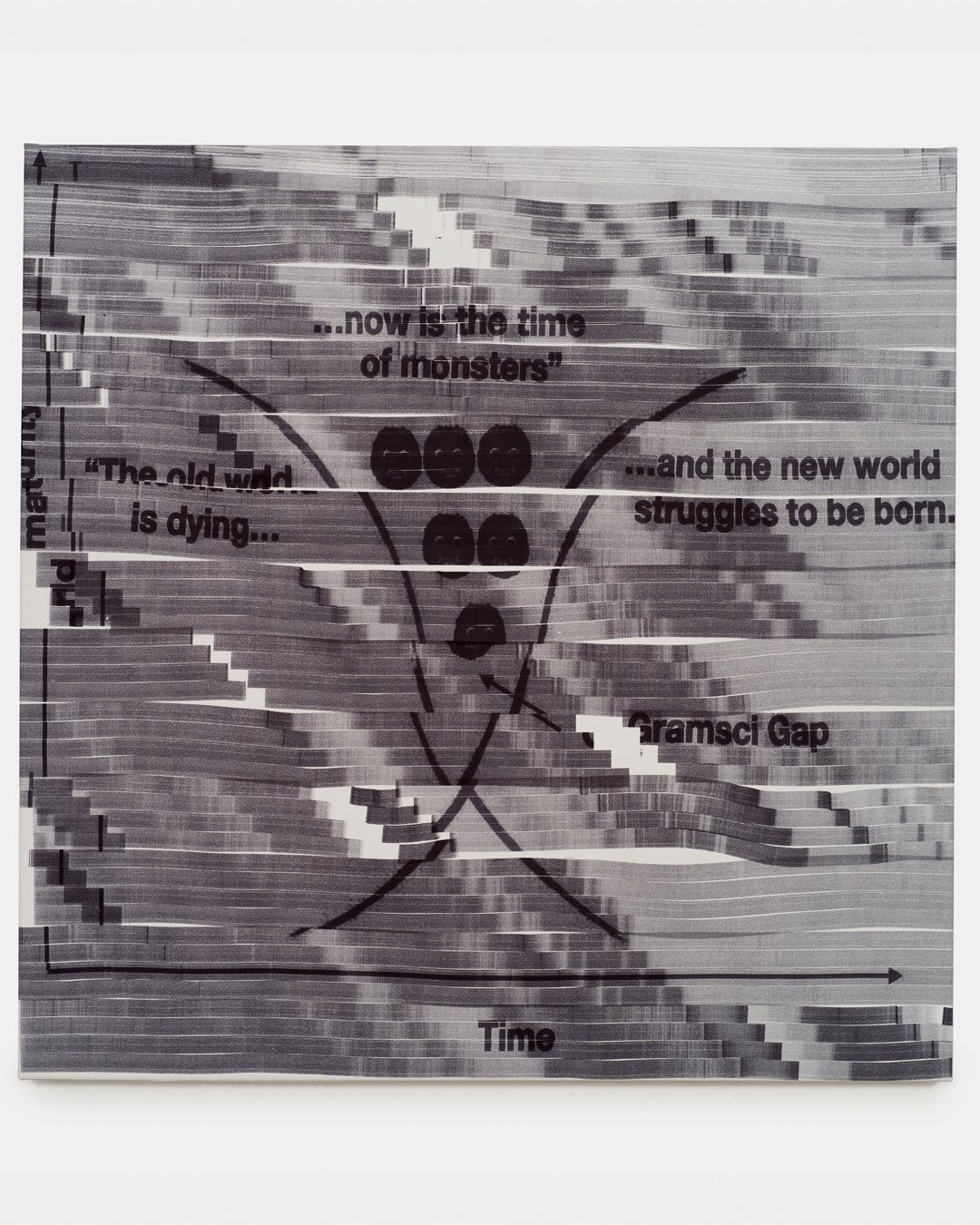
In a corner of the Palazzo Diedo, as part of the Strange Rules exhibition, was an artwork by Simon Denny working with Venkatesh Rao, that put to task to visualising the Gramsci Gap.
The old world is dying, and the new world struggles to be born: now is the time of monsters.
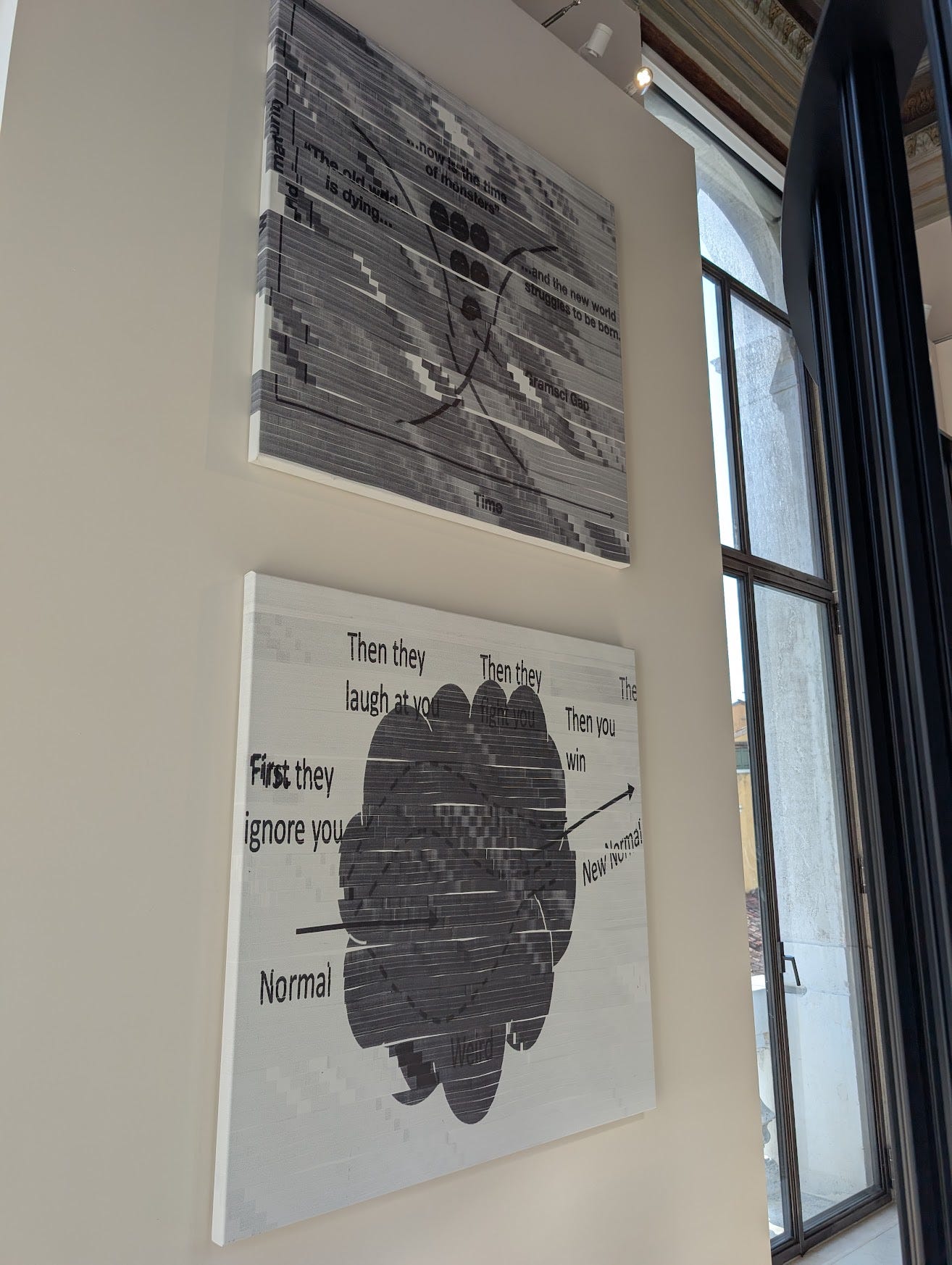
One’s 30s can be a time where you suddenly start to feel that all the new things are too new. So, I’m cognizant of the weight of time’s ability to warp my perspective, but there is a distinct feeling that now is an in-between time, an interregnum.
In the essay related to the artwork, VGR explains, that exceptions are always a part of the fabric:
In any societal system, within some broad band of normal operating conditions, there are always some individuals with some degree of Schmittian sovereignty. In a sufficiently complex system, the presence of discretionary exception-making roles is normal.
This outlet valve is usually regular and normal: like a head of state’s ability to pardon and issue commutations, or a system’s ability to repair itself when it breaks. But, during “monstrous” times, these exceptionists (yes, I just made that term up), like a flood, wash over previous limits and thresholds and exhibit “morbid symptoms”.
In people, it can look like: mad emperors, unaccountable bureaucrats, and an increase in anarchs (eg, terrorism).
In systems, it can look like: inadequate rules (too many, too few), ambiguity, and rules simply not matching the depth we need.
While exceptions are normal in “regular” times, I like to think that the simplest way to notice an in-between time is when exceptions become the norm. Exception-making in reasonable times are exactly that: exceptional. The new world wants to exhibit new behaviour that the old world can’t and so it creates more and more exceptions.
And so, maybe now is an interregnum, maybe it isn’t. It’s like defining “late” capitalism or like trying to predict the peak of a pandemic: we’ll only know when the new world has arrived and the exceptions have gone down. But right now, I believe, we can safely say that in the last decade, exceptions have risen. There’s been a breakdown of rules and norms (particularly, international), and our systems/institutions have been slow to adapt to rapid change (sidenote: at least the Catholic Church are issuing encyclicals on AI).
In a time of rising exceptions, when the muck has muddied the waters, it feels like the best course of action is to pay attention. It is the time of the discordance of a minor key. As the main curator for the 2026 Venice Biennale International Exhibition, Koyo Kouoh (RIP), wrote after titling it, “In Minor Keys”:
This is an invitation to encounter these words in the immediate physical, meteorological, ambient, and karmic conditions in which they meet you. To shift to a slower gear and tune in to the frequencies of the minor keys. Because, though often lost in the anxious cacophony of the present chaos raging through the world, the music continues. The songs of those producing beauty in spite of tragedy, the tunes of the fugitives recovering from the ruins, the harmonies of those repairing wounds and worlds.
In Minor Keys
A minor key is when, in a scale, the third note is three half-steps up instead of the major scale being four half-steps. A major third has a frequency ratio of 5:4, meaning that the third note vibrates 5 times for every 4 times of the root note. A minor third is 6:5. It means that minor keys tend to create more acoustic tension because the frequencies align less perfectly than a major key.
As Kouoh writes:
The minor keys refuse orchestral bombast and goose-step military marches and come alive in the quiet tones, the lower frequencies, the hums, the consolations of poetry, all portals of improvisation to the elsewhere and the otherwise. The minor keys ask for listening that calls on the emotions and sustains them in return.
…and:
Through a visual and meditative procession, the exhibition prompts all senses to interconnect and meander from one universe to the other, rendering visible the possibilities that reside in the in-between spaces and beyond the portals.
So what did I hear?
On the one hand, it’s hard to not sense the anachronistic nature of it all. Throughout two primary locations, most of the art is exhibited in national pavilions. It’s filtered through the old grandness of the nation state in a time when democracy and trust in institutions are in decline. There’s no better example of this feeling old than the fact that the Czechoslovakian building still exists.
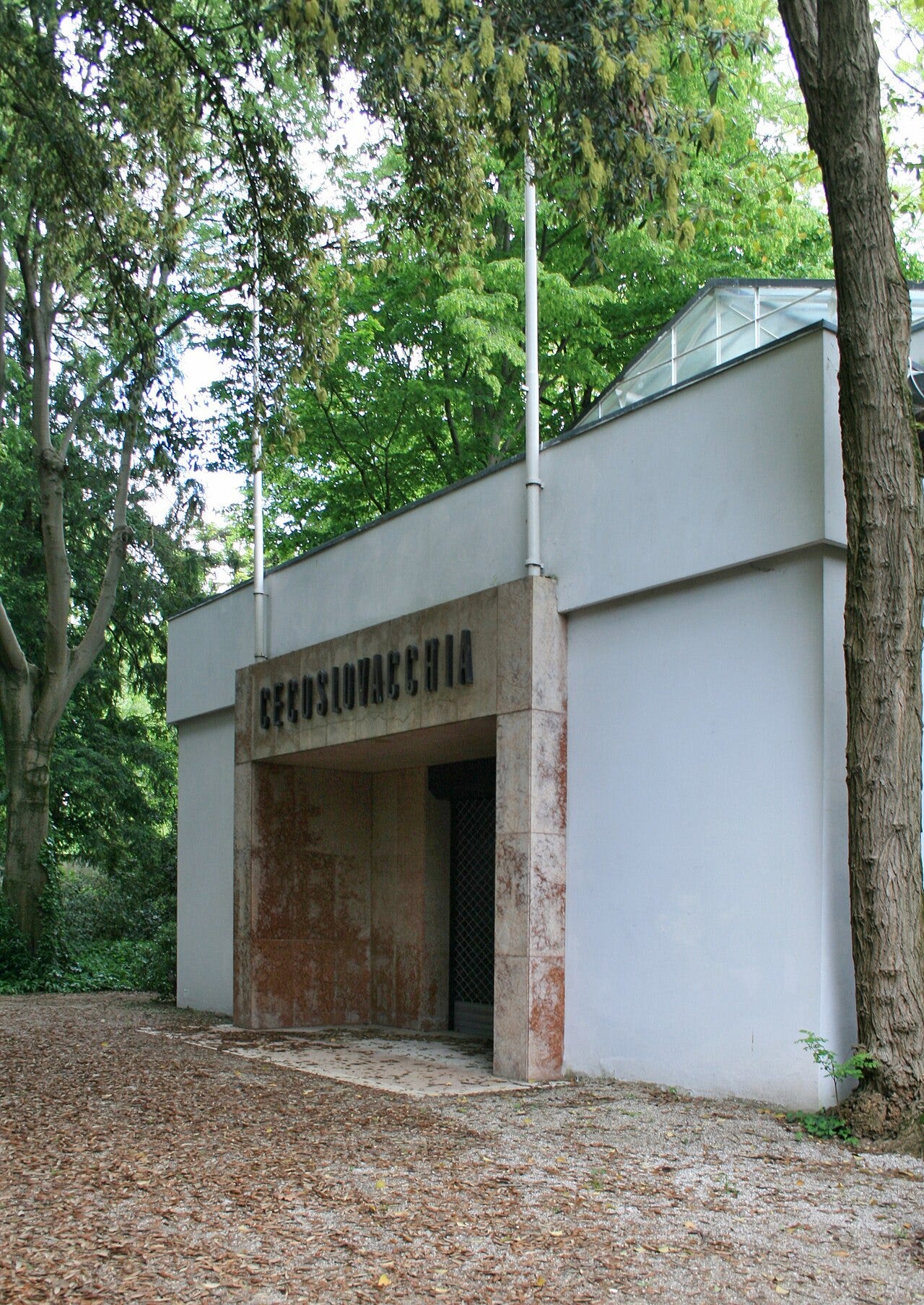
And so, contextually, with the cost of attendance (flights, hotels, etc) and it being presented through the nation state lens, it makes it harder to absorb the art, especially when the art is about critique.
In this review, Gracie Hadland, refers to the popular Austrian Pavilion, where among other works on display, a woman swung herself naked in a large bell:
In the language around the exhibition, as with many others I would visit, there was a deranged insistence on the work engaging in so-called difficult conversations about political or environmental discourse, addressing a crumbling system along with an industry and a world in crisis. These claims were hard to take seriously when the spectacle of the Biennale itself had transported thousands of people via plane during an oil crisis to see art in pavilions hosted by countries whose leaders stand accused of war crimes by the International Criminal Court. Holzinger certainly leaned into the spectacle, but I wondered what for. By the time protests erupted at the Russian Pavilion on Thursday, and by the time of the general strike initiated by Art Not Genocide Alliance on Friday, most of the art-world set was already leaving the island.
To engage sincerely, you have to both appreciate the grandness of the context and also, set it aside. In 2026, how does the context of the nation state both help and hinder the art on display?
For example, in the Dutch pavilion, a woman raged against the world and weaved through the crowd while the entire locked pavilion slowly shuttered out all light.
Dries Verhoeven is a visual artist and theatre maker. The new work The Fortress explores self-preservation in the face of major geopolitical uncertainty. Verhoeven and curator Rieke Vos take the contradictions of the Biennale as their starting point. According to the artist and curator, the Giardini della Biennale embody a world order from a bygone era, in which former Western powers still occupy a central position. They observe that countries, which in reality are closing their borders or rearming, appear to exist alongside one another in harmony, and that art seeks to uphold the idea of an Enlightenment tradition and a hopeful future.
During the Biennale Arte 2026, the Dutch Rietveld Pavilion, a modernist monument to openness and progress, is transformed into the antithesis of itself. Once visitors have entered the space, metal shutters gradually descend over the windows. What was once open, transparent, and accessible becomes dark and introspective. Performers emerge from among the audience. Reflecting the end of Enlightenment ideals, irrational impulses gain the upper hand. First comes bewilderment, then frenzy.
In the quiet descent into darkness, she was like a ghost, screaming. At first, I didn’t connect with it, but, then in the days after, I couldn’t shake it. In the darkness of it, it was the time of monsters. The focus of the performance went from dark rage to shouting to love oneself. And the latter eventually shined through as the shutters reopened to show us the light. In some sense: the gramsci gap as performance.
It’s echoed by Aodhan Madden who felt:
For, if there is a consensus that “our” world, the one ailingly represented by the Biennale, is becoming more and more violently chaotic, why should we think that falling into the old Enlightenment traps of “reflection” and “rationality” is what the world “needs” right now? Instead, what has stayed with me were moments when dissonance and a certain form of dark celebration were affirmed.
Besides the context itself, there was so, so, so much great art. Really a joy to see. So much care and attention from spectacular artists.
Besides the Dutch, I enjoyed the following pavilions the most: Japan. India. Holy See.
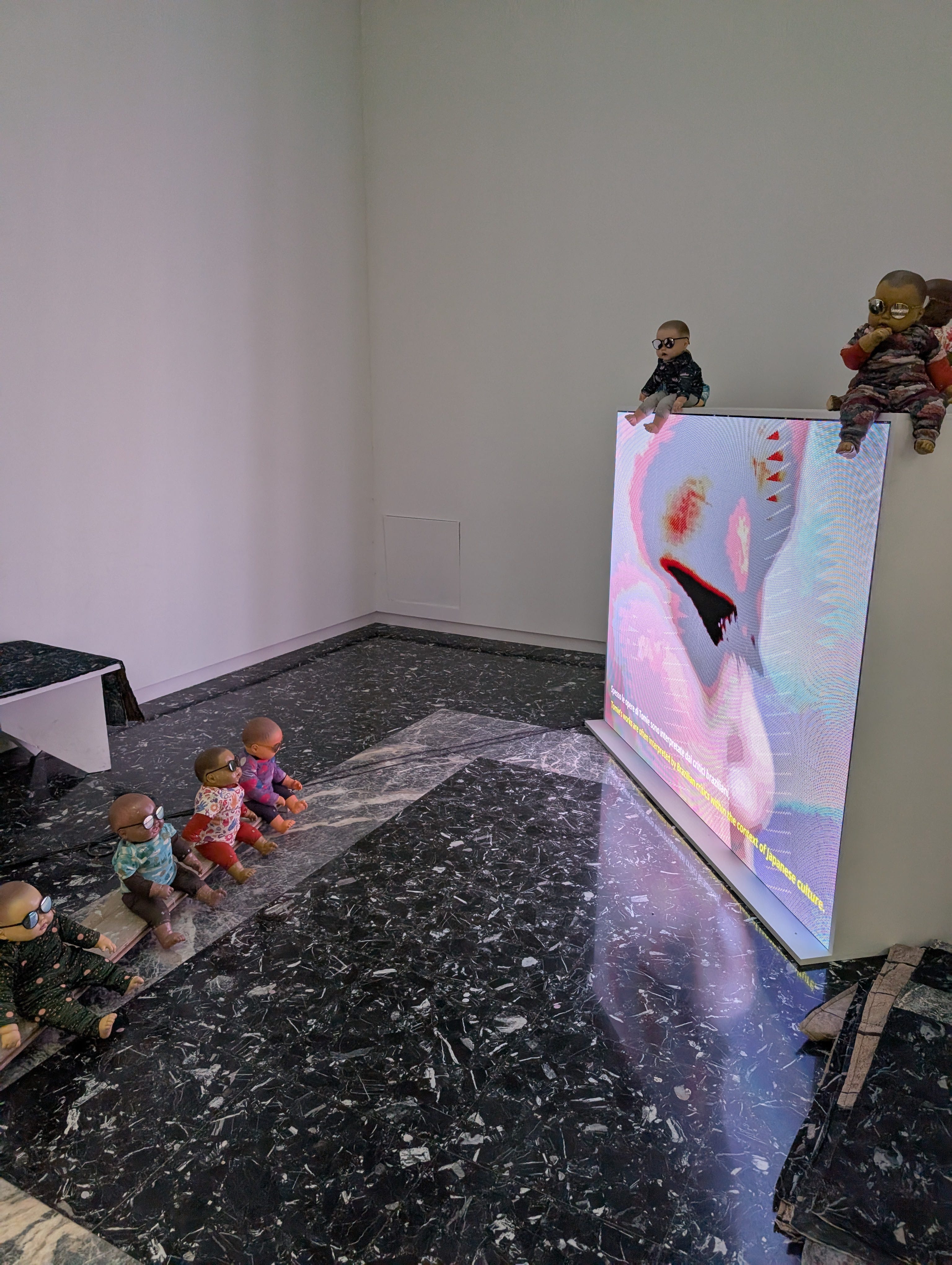
In the Japanese pavilion, the artist Ei Arakawa-Nash, had us carrying cool babies with sunglasses around the pavilion, centering the artist’s queerness with the question of becoming (or not becoming) a parent. The playfulness compared to important dates that the artist wanted their children to know about was poignant.
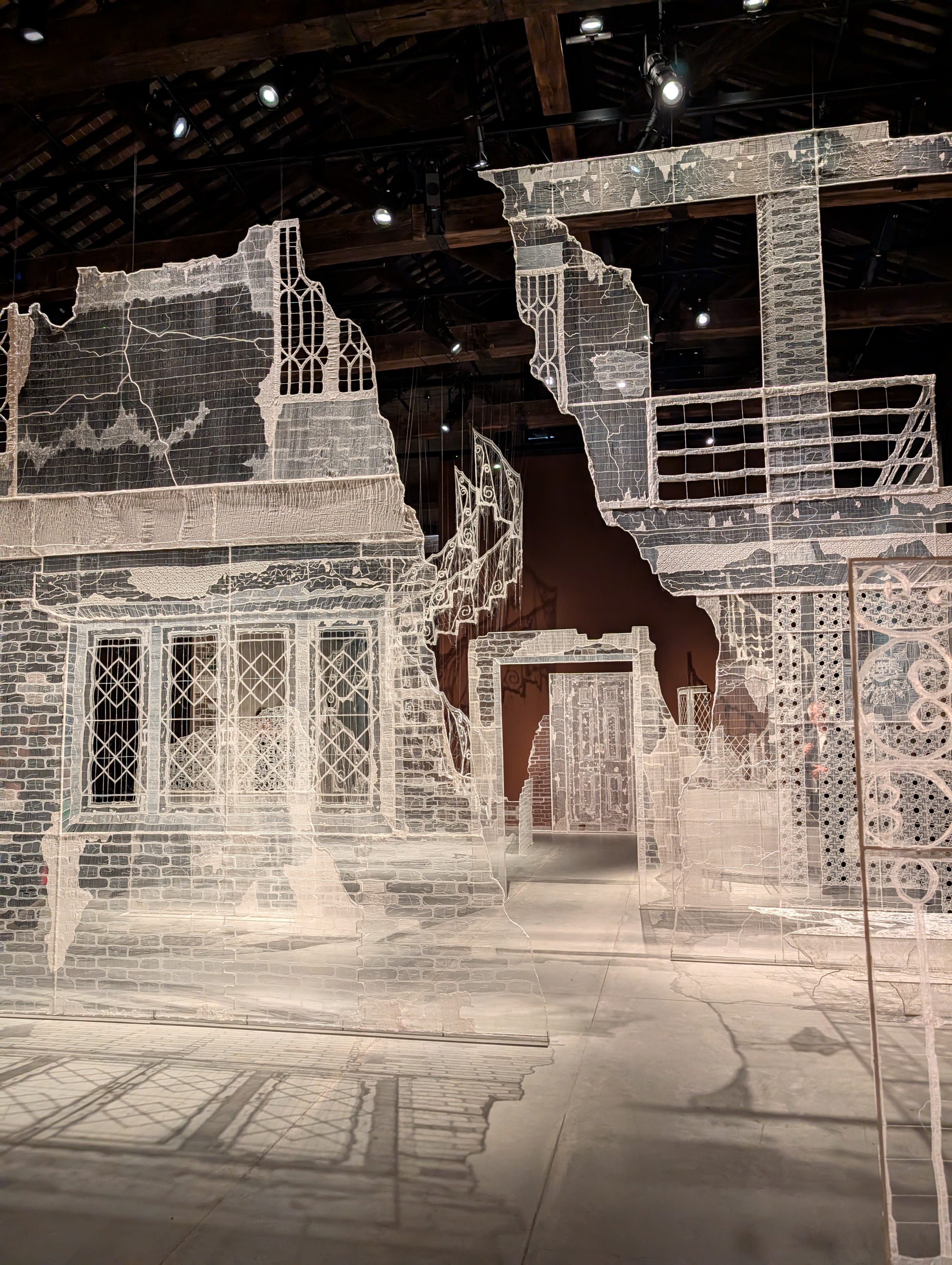
India’s focus on structure was beautiful, especially the work Sumakshi Singh that recreated a ghostly memory of a demolished childhood home.
At the The Holy See exhibition, curated by Hans Ulrich Obrist and Ben Vickers the focus was aptly, on listening. It was wonderfully contemplative walking through the Giardino Mistico dei Carmelitani Scalzi after dodging a thunderstorm and seeing the skies clear overhead.
Responding to Koyo Kouoh’s call for quieter registers, the pavilion proposes listening as contemplation. Hildegard – abbess, composer, healer, visionary – understood sound as knowledge, a bridge between body and world, microcosm and macrocosm. In an age of saturation, her work invites inwardness.
Nick Cave’s sculpture was also magnificent in the Arsenale.
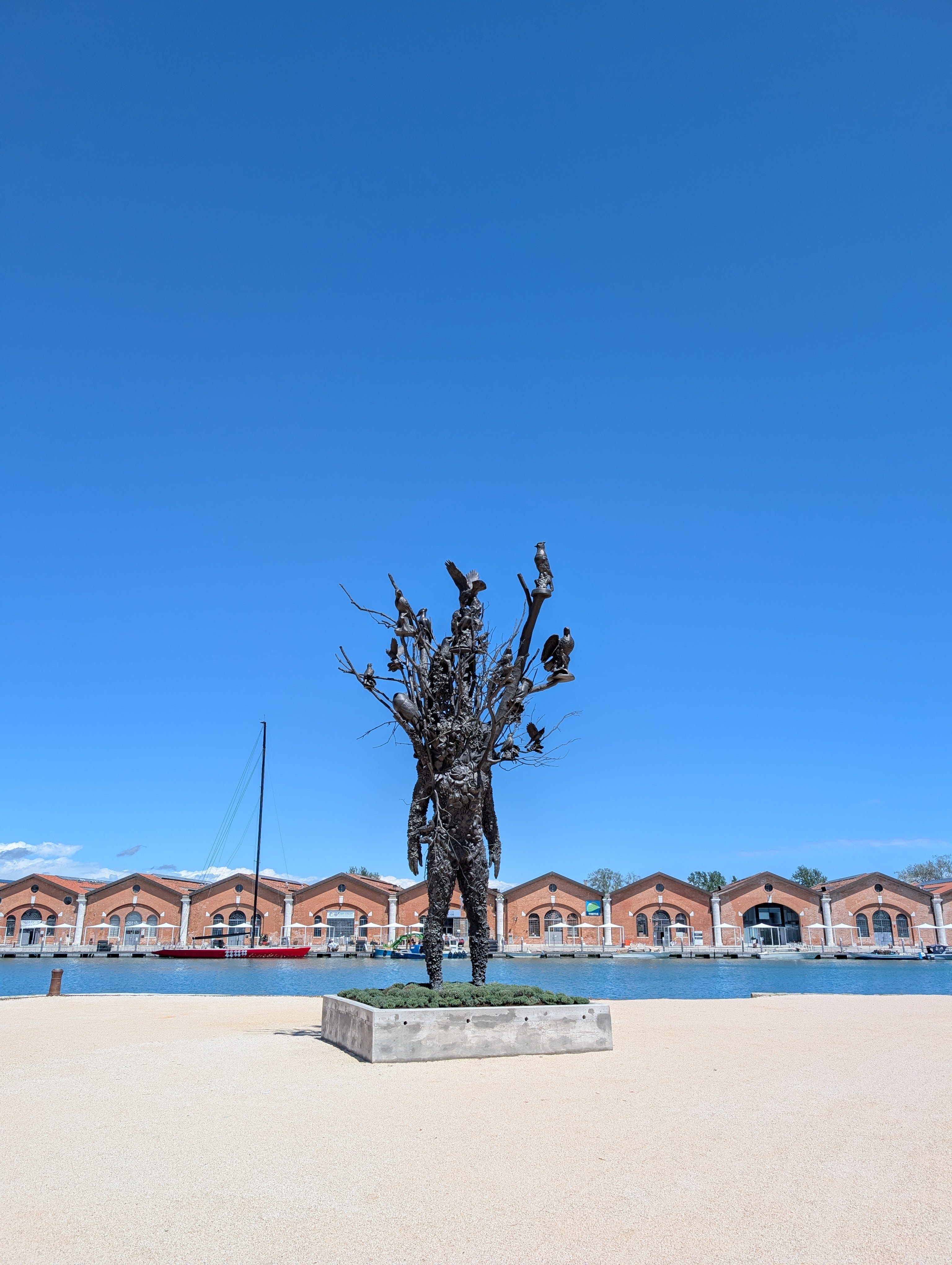
After my friend Scott told me he was walking around gloomy/rainy Venice listening to the Disco Elysium soundtrack, I had to do the same when I witnessed this sculpture!
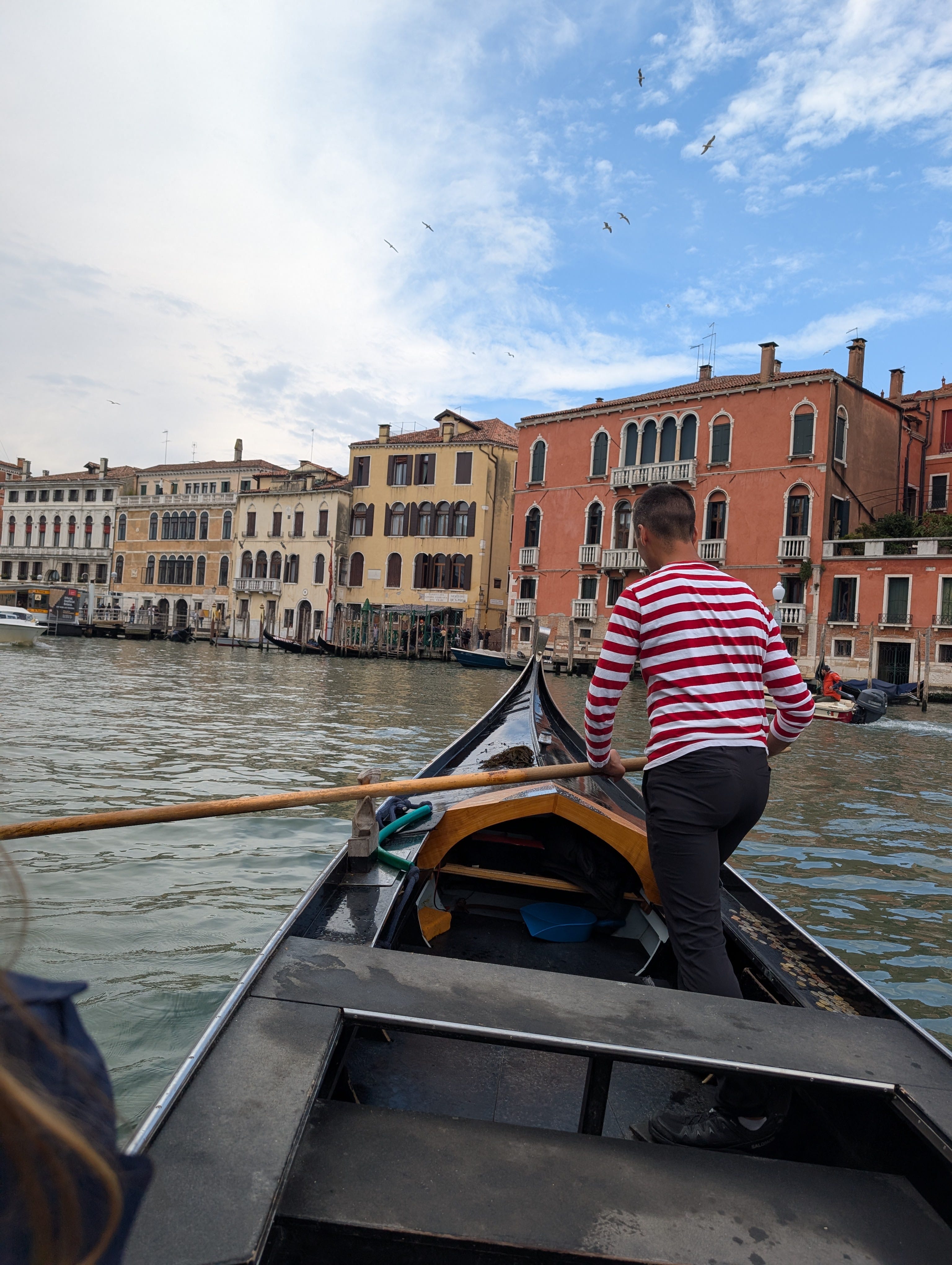
Experiencing the biennale is not complete without experiencing the rest of the city. I enjoyed getting lost in the alleys, eating good food (trying the anchovy and onion pasta), and reading more on the history of this unique city. I was quite astonished that the city rose to prominence in part because the Venetians stole the body of St. Mark. It does aptly seem to mimic the famous quote: “Good artist copy, great artists steal”?
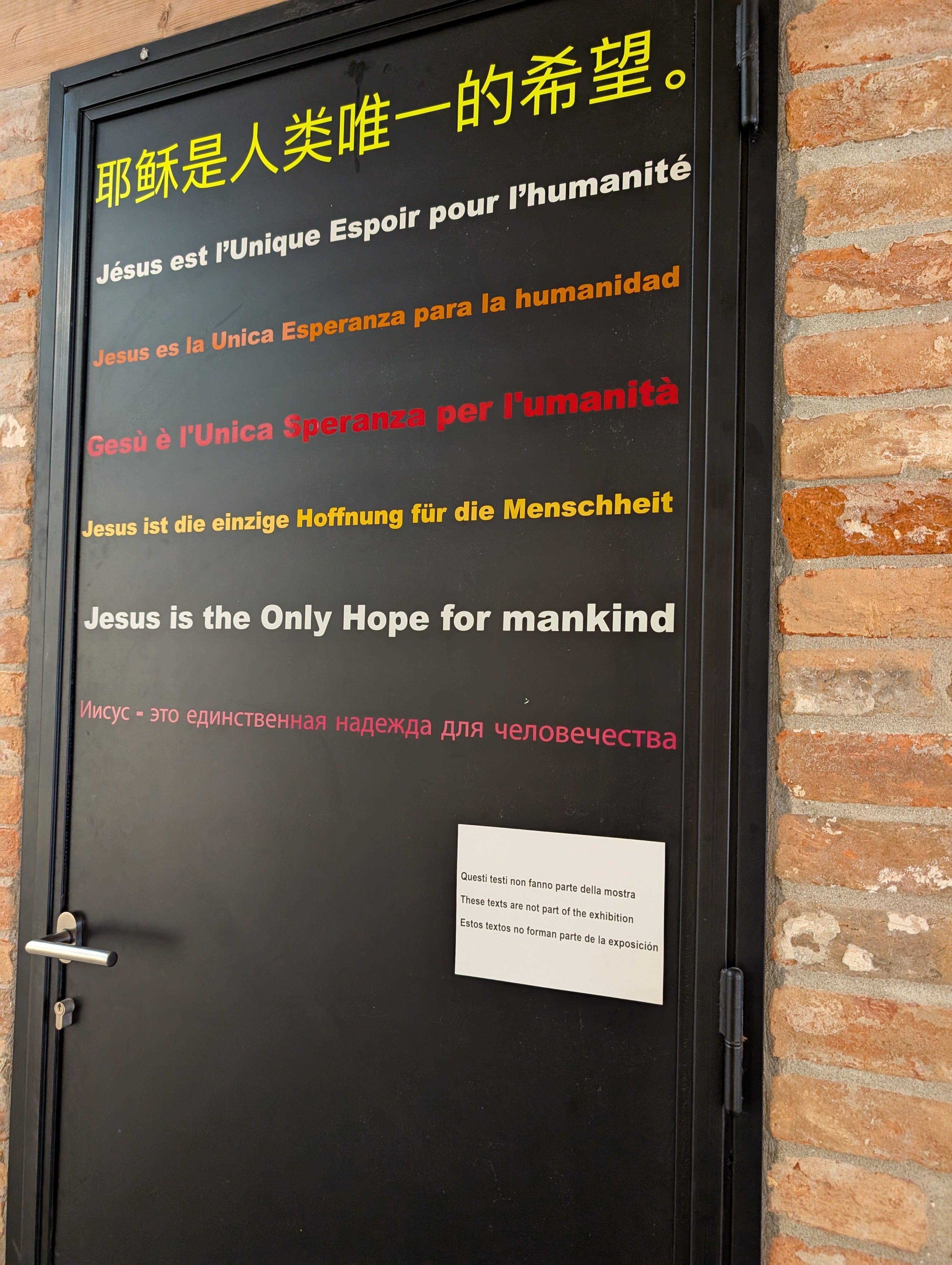
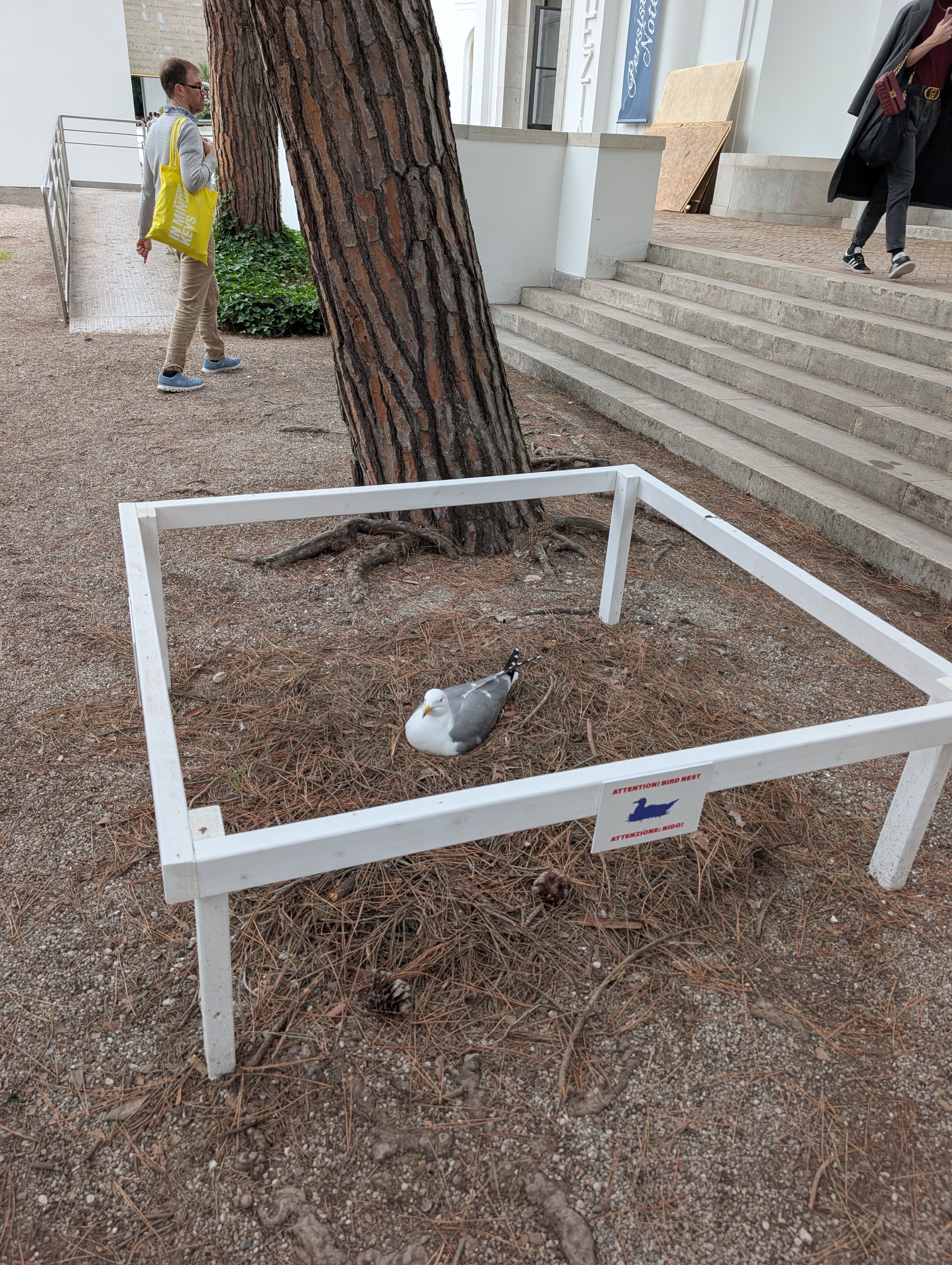
There were other forms of discordance, throughout Venice and the biennale that presented some interesting juxtapositions. Three that stood out were: the labelling of not art, a bird’s nest, and the fact elsewhere in Venice, the vendors were selling AI generated T-shirts of 6 7 memes, Tung Tung Sahur, and other Italian Brainrot Animals. It felt apt that seeing Italian Brainrot IRL for the first time would in fact be in Italy in the shadow of the world’s greatest art show.
This is art! This is not art?
Please Ignore Me
Overall, it was a magical experience and the theme was apt. I don’t really know entirely what world is trying to be born. Maybe, the rise in exceptions we see are only temporary and we’ll return to what we’ve had. Whether this noise will continue until the next biennale in 2028, or whether the frequencies will line up for new harmonics of a new world, we’ll have to see. Despite the changing times, it’s still magical to see and experience the Venice Biennale. If you’re into art at all, I’d highly recommend finding a way to visit at least once.
On Protocol Art and Strange Rules
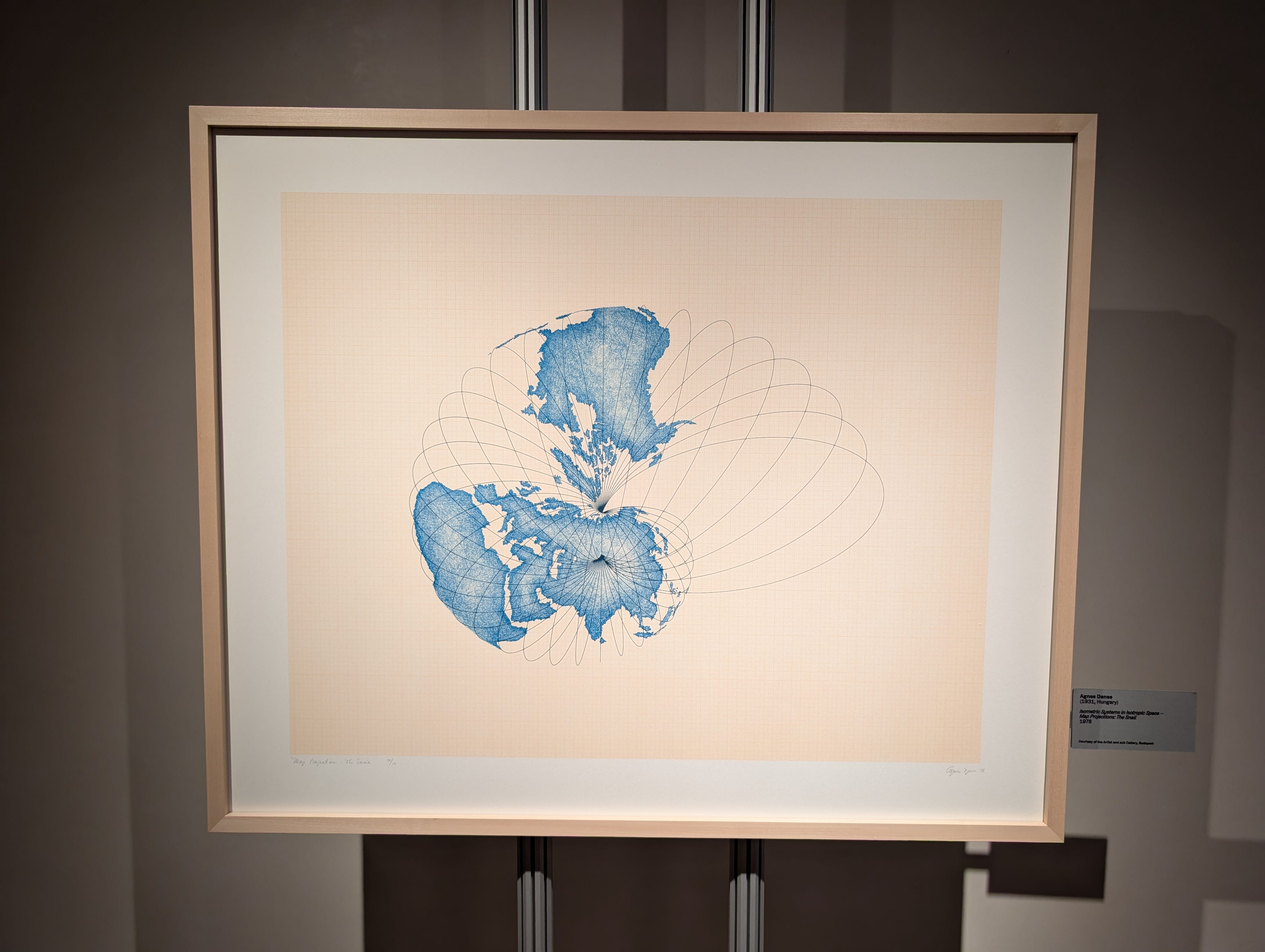
Besides the biennale itself, there’s also collateral events and myriad other art exhibitions taking place all across Venice. One favourite was “A Necessary Fiction: Maps, Art, and Models of Our World”, because well, I love maps.
The other, fully up my alley, was the Strange Rules exhibition curated by Mat Dryhurst, Holly Herndon, and Hans Ulrich Obrist with Adriana Rispoli, held in the Palazzo Diedo. Focusing on “Protocol Art”, I enjoyed the projects on display: from Mat Dryhurst & Holly Herndon’s Lur to Joshua Citarella (Doomscroll) and NEW MODELS pop-up Marketplace of Ideas.
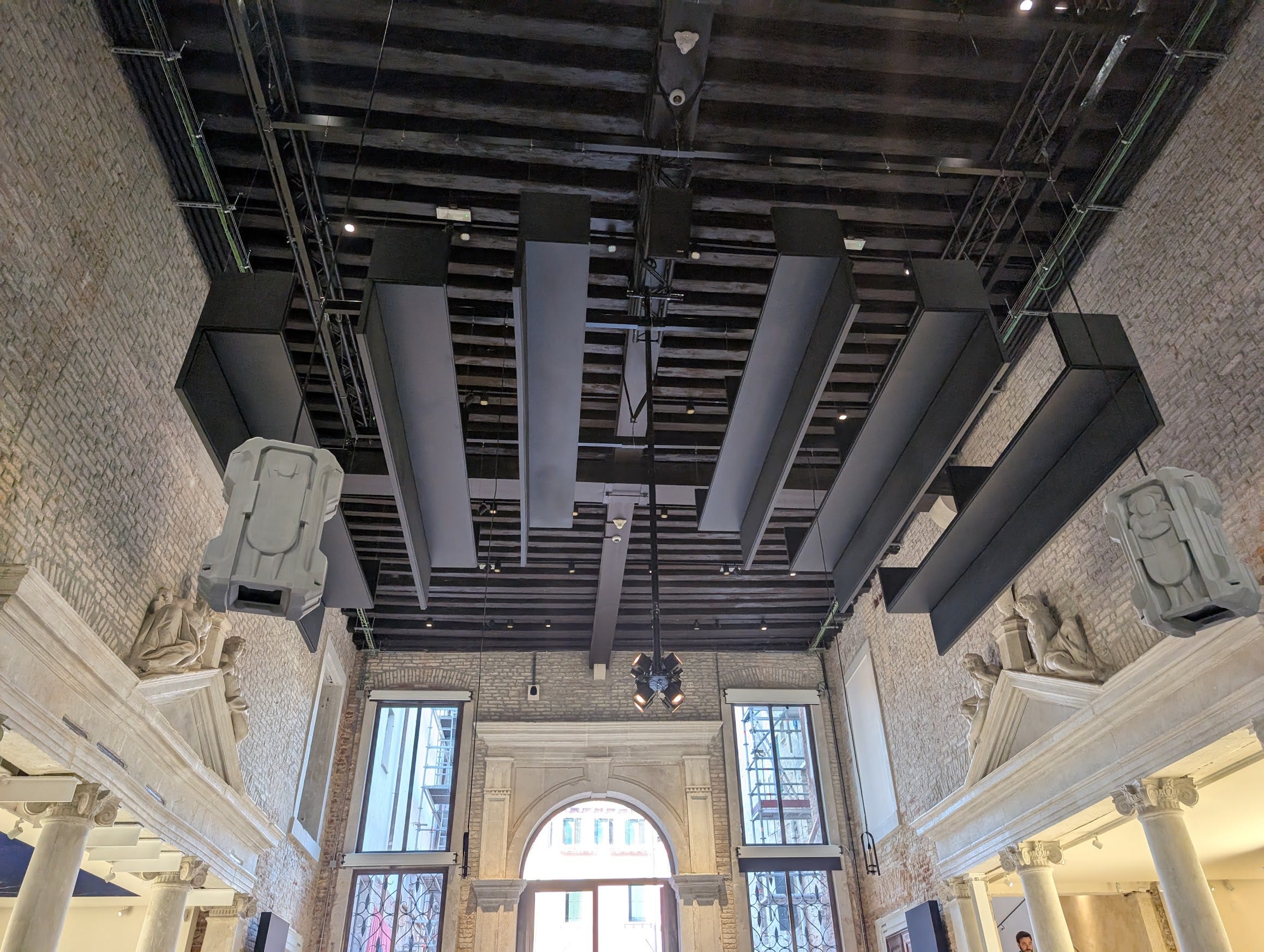
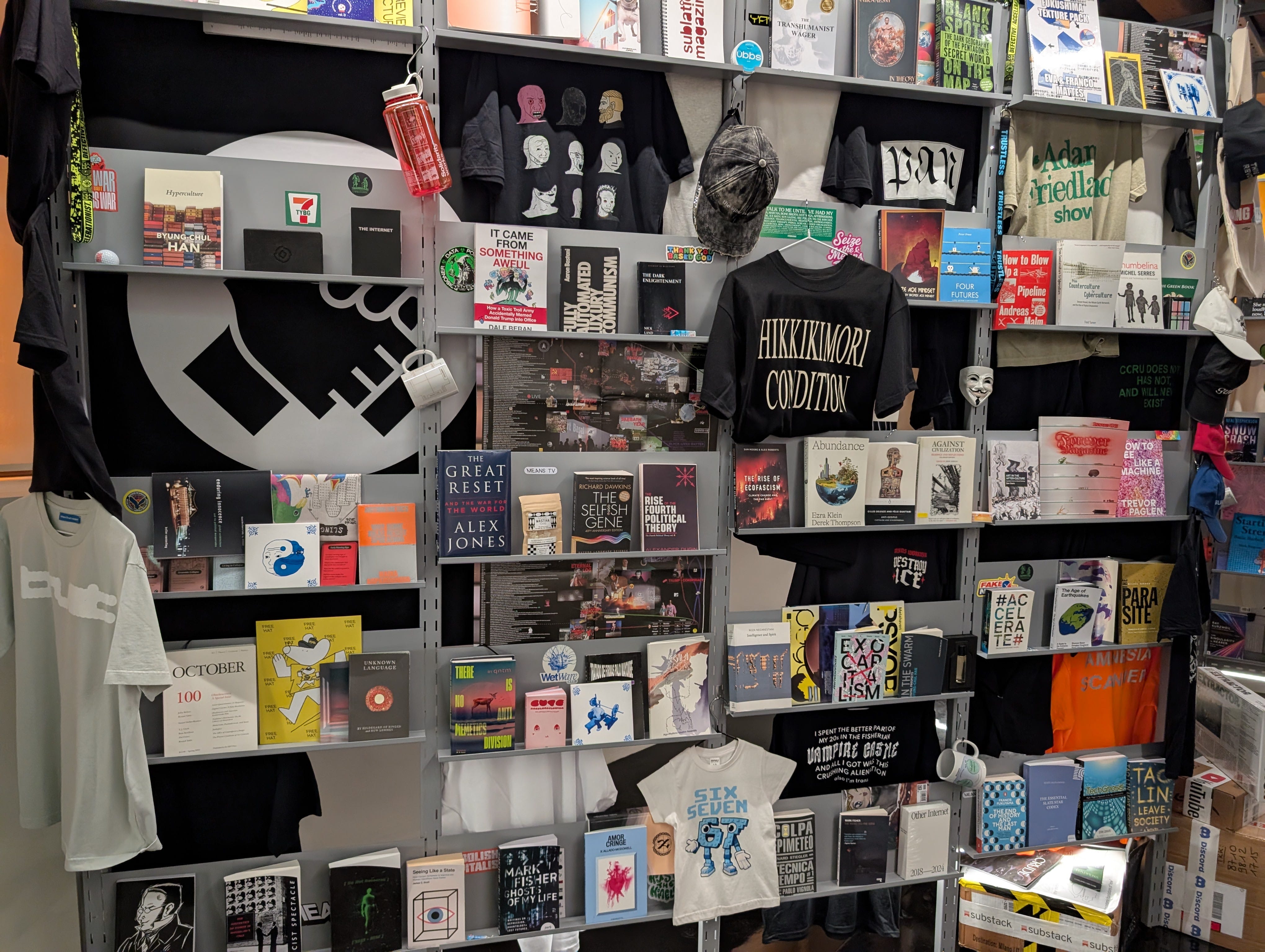
In part, this exhibition also wanted to lay the groundwork for showcasing and defining protocol art. Their emphasis:
Strange Rules introduces the concept of Protocol Art, a practice that engages with the underlying rules that dictate how culture is produced, distributed, and perceived in a digital age. These rules frequently manifest as algorithms, artificial intelligence models, computer protocols, platforms, and various technological infrastructures. Protocol Art does not simply use these tools; it exposes, analyses, and transforms them into artistic material itself.
Consequently, the artwork is not merely a final product, it is a process governed by instructions, representing the invisible architecture that enables the aesthetic experience. This shift in perspective - moving from the object to the system, and from the singular author to collaboration and ultimately human-machine co-creation - defines one of the most urgent territories in contemporary research.
I was quite happy to see this genre of art given such a stage next to the rest of the biennale. It’s given me opportunity for introspection as to my involvement in this art movement. Why do I produce “protocol” art? Why do I like it? What is it’s role?
In a sense, my core joy of protocol art stems from being interested in systems. I’ve always enjoyed learning about the way things work and, particularly, how and why they produce certain outcomes. A key example, is last month’s essay on road design.
Art from rules is like a game: one that can be played with. In this, players leave their mark behind or invite play from other participants. A key vision behind Protocol Art, to me, is that it makes known or creates the systems behind our art. Much of art is visible only in its output. We see galleries hanging framed paintings without any knowledge of its context, history, or process. But we rarely see or understand how the art came to be. In that, the “art world” can sometimes produce or fabricate narratives, like believing in singular genius, when making and selling art successfully sometimes requires a team of people with different skillsets.
Because Protocol Art helps us see behind the veil a little and because it’s focused on rules, it feels both grounded as reaction, but also, well suited for sharing connection.
Protocol Art as Reaction
The former, as a reaction, stems from the fact that since the advent of the web, we’ve fallen into a collapse of shared reality of truth. We’ve stumbled upon a more neurotic global society because we can’t always trust our own eyes and ears. Digital objects (and outputs) by themselves are now infinite, unbounded, and unknowable in the age of slop, cheap distribution, and algorithms. Rules, for the most part, are simpler than what it produces. The rules of hockey produces countless unique games. A generative art algorithm is finite and its outputs, infinite.
Thus, the reactionary appeal of Protocol Art is that we’re simply overwhelmed. It centers unique rules as the primary form over the outputs it produces. It’s because rules are simpler and knowable. It’s bounded. Tangentially, I also believe that’s why the appeal of ‘liminal space’ memes have grown similarly.
Liminal spaces are infinite templates. They are interesting because we’re not necessarily interested in the specific instantiations of it (there’s many backrooms lore/levels, etc), but in the template/pattern of it. If I may stretch the definition of “Protocol Art”, I’d argue that the “meme template” is one of the era’s defining examples.
When we can produce near infinite derivatives, appeal comes from constraints: invariants that bound the latent adjacent possible. We’re looking for shaped cookie cutters, because that at least tells us to some extent what each cookie could look like.
It’s also why a good part of anti-AI sentiment is rooted in wanting to hold onto understandable process.
As an art movement centered around reaction to complexity, it has quite a lot of room to play with.
But… I think it’s more interesting when seeing protocols as a space for engagement.
Protocol Art as Participatory
The second part of Protocol Art is one that I feel has perhaps, longer-term value and appeal: that of usually treating participants as fellow players. Rules exist because it defines engagement. Protocol Art often tries to make the participants a part of it, willingly, or unwillingly. Mat and Holly’s work often focus on this: In Strange Rules, their work had mics recording the conversations from the pews for an AI agent to use. Other examples were the “The Call” and “Starmirror” singing sessions to co-train a choral machine learning model.
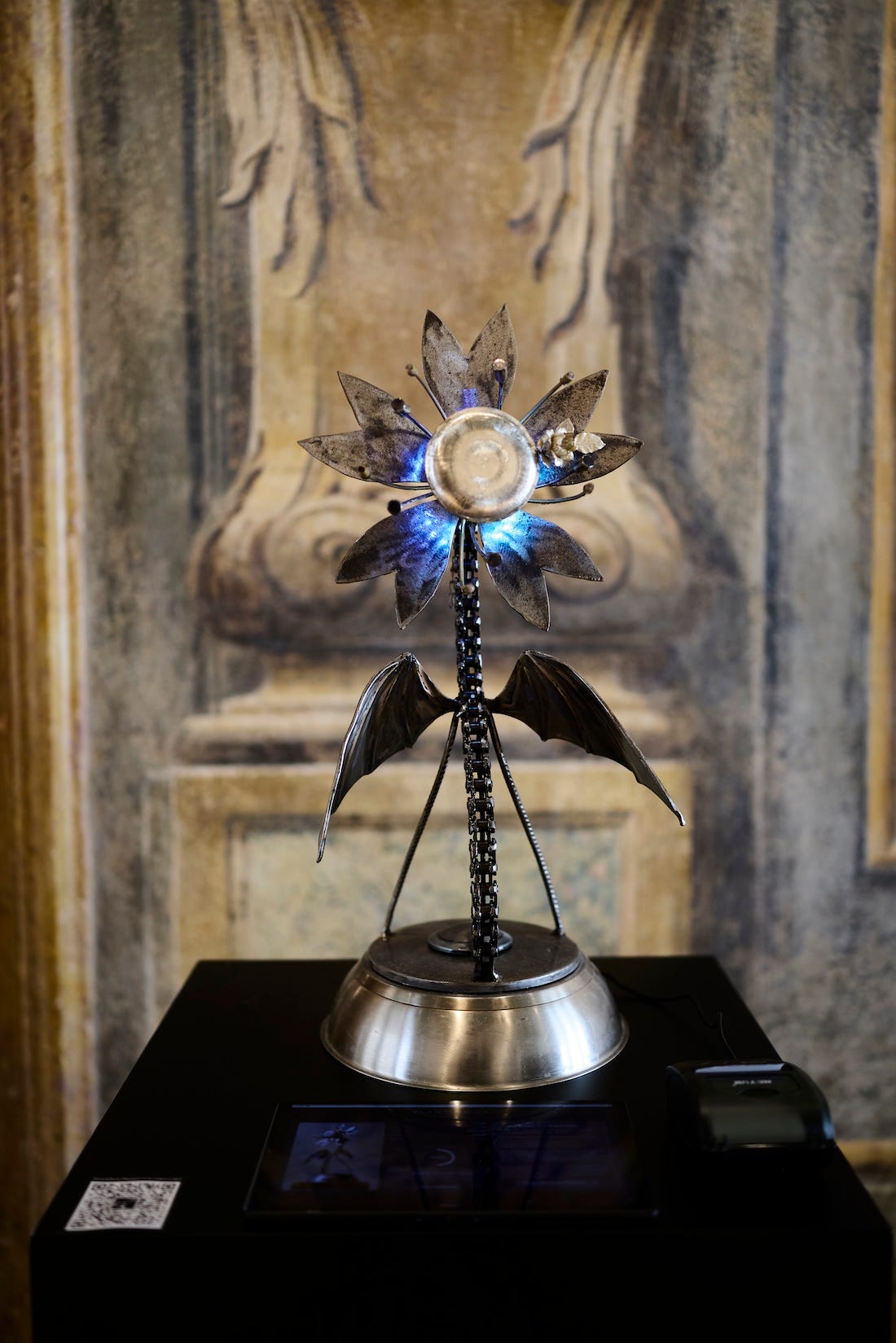
Elsewhere at Strange Rules, Primavera De Filippi’s Plantoid was on display, asking as always, for donations, to proliferate itself.
In its more technical form, the most interesting blockchain protocol art are ones where the art itself modifies itself based on its own provenance. One work I’ve espoused countless times, is Takens Theorem’s “The Mesh”, where the art itself changes without human input based on what other artworks the owner, owns.
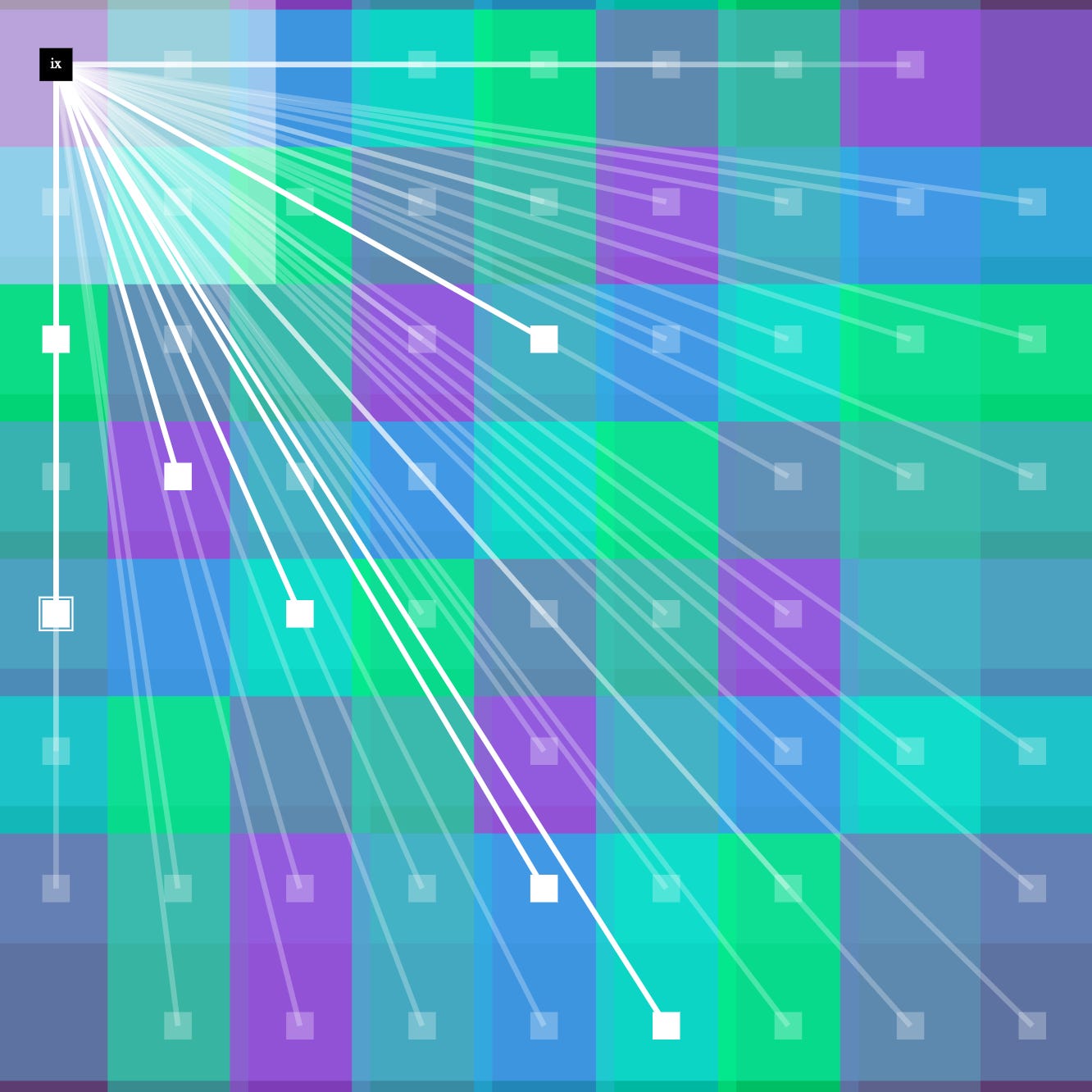
Protocol Art as art that codifies engagement that is also participatory are the most interesting to me. It’s not just games or performance art. It’s about where the lens is pointed. Games are ultimately about the play. The rules of Rugby can serve as interesting allegories for modern society if you squint, but that’s not what it was made for. Protocol Art is still art: in that it attempts to draw new contextualizations.
And so, if I’d advocate for it as a movement, great Protocol Art deepen our understanding of the human condition by pulling us (and other participants) in through new rules of engagement. In the best case, while mucking about in the interregnums, it might even help us to see what new worlds have already been born.
I’m glad the exhibition exists. I’m glad this scene keeps growing.
A Footnote On Serendipity
One of my favourite life experiences are highly unlikely serendipities. One of my favourite musicians, Plini, was touring Europe with his new album. Not planning on crossing paths at all and not even knowing they were in Venice, I saw him walking across the Piazza San Marco while I was on the way to dinner (ht Plini for the selfie)!
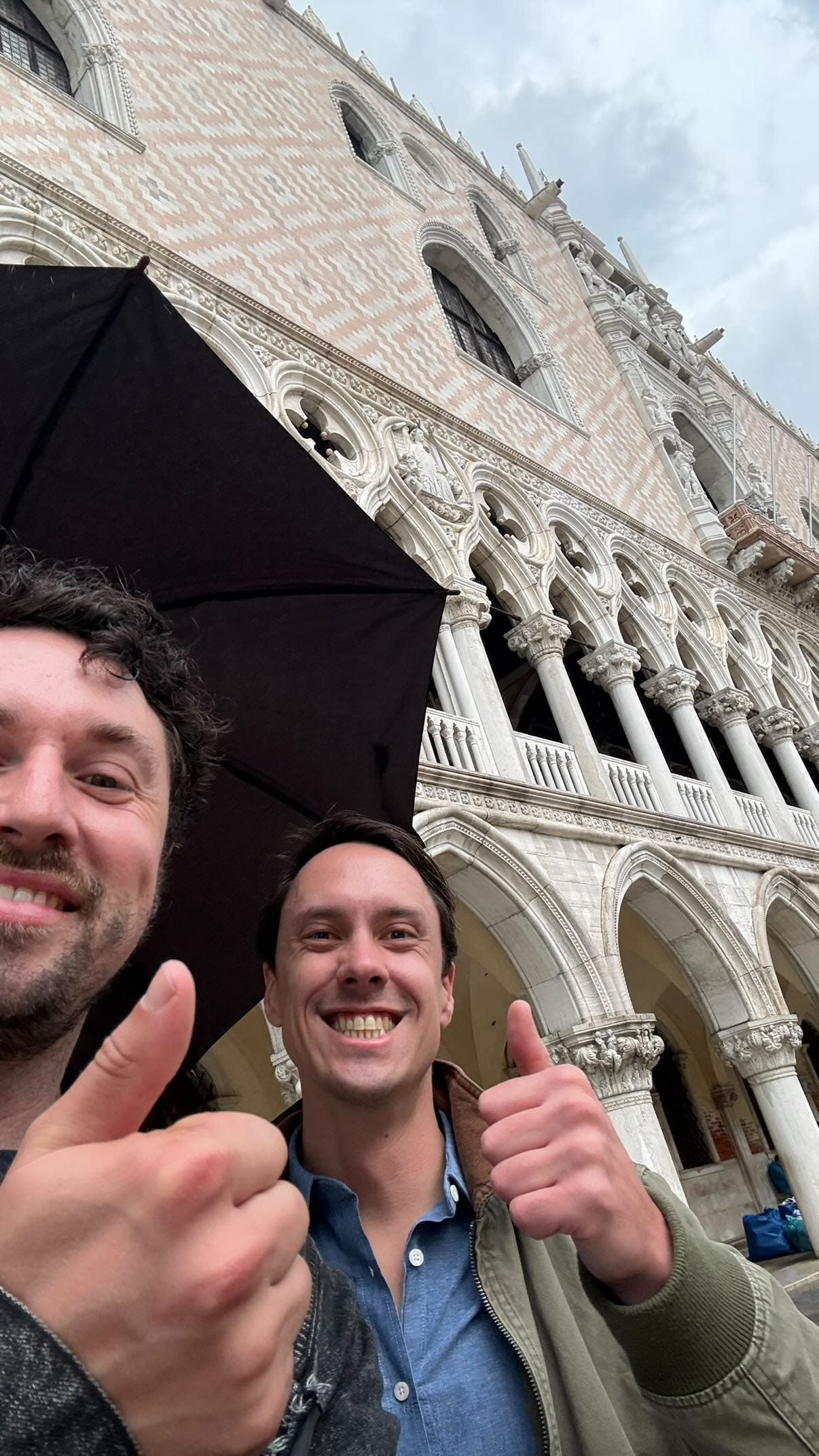
When we think of exceptions, we often see them as events where extraordinary power is used to patch up inadequacies. But, there also positive exceptions: like finding a friend you didn’t expect to see in a massive crowd in Venice, both far away from where they usually call home.
In a time where we’re required to listen, to pay attention, it also means we can hear notes we might not have heard otherwise. Interregnums can feel scary and uncertain, but there’s also new chords playing through the chaos. You just have to pitch your ears and also hear the new notes among the growls of monsters.
Welcome to May Edition of Scenes With Simon. Because May was full of travel and some rest, there’s no extra essays for this month. So, please enjoy some extra snippets and then catch up on what I’ve been up to (besides art, pasta, and fondue)!
Hoping to get back into regular routine for June!
Snippets From The Web
New Onchain Art
Speaking of Protocol Art. Some new onchain art projects that graced my feed.
Talismans by TokenFox (I dig the low poly gem look)
Norml by Jiwa (I dig the way collectors reveal the art together)
The Long Drift by dav (love the encoding of music that looks like noise)
AI, Tractors and Productivity
A really interesting essay by Sachin. He argues that AI actually drives up integration costs in firms.
Inside firms, integration costs are rising because differentiation between individuals and teams is accelerating faster than integration mechanisms can adapt.
The intensification of work that people feel with AI use points to this increasing integration cost. Outside firms, transaction costs are falling faster than people have habits for exploiting them — workers are not yet used to reaching past the org chart and engaging with markets constantly, and firms are not yet structured to let them.
Making Data Centers Beautiful
If data centers are a part of our future, at least let’s make them beautiful.
Sortition in the Arts
I think sortition is generally understated as a solution to some ailments. I agree that it coule be really helpful and interesting in culture/arts. (sidenote: this is also relevant regarding recent discussions around the success of Backrooms and Obsession on how to give which young directors access).
What I’ve Been Up To
Creating:
✍️ Writing - Novel #2
Prior to travel this month, I managed to reset the outline fully since I started revisions in January. For the most part, it’s now “story” complete. But, detailed scene work still needs work. It will still take a month or two to finish this draft. When I went back to the start of the book to finish this draft, I did feel quite happy with what I’ve written thus far. I’ve learned so much about writing, storytelling, and what stories I want to tell through this book, that in the end, wherever it ends up, I’m happy with where I’ve taken it. The book itself has been anchor to a turbulent part of my life, and for that, I’m glad it was there for me. In that, it’s already been a success.
🖼️ Art
See above 😅
Consuming:
📺 Watching
A Haunting In Venice. Murder On The Orient Express.
Love a good Poirot story.
Sentimental Value
I’m a big fan of Stellan Skarsgaard and so I enjoyed this film. It centering our work as tools for communication felt apt in the same way that the work on my novel provided grounding when my own life was difficult.
Eternity
A sweet film and an interesting take on the afterlife. It did feel like it lost its way towards the end, but I enjoyed it. It reminded me a bit of the adventure game, Grim Fandango. It did also give me some interesting ideas for stories that center afterlife experiences in unique ways.
🎶 Listening
Plini - After Everything
His new album is great! Do have a listen!
Doux Doux - Jesuslesfilles
Great song to drive to!
Radiohead - Everything In It’s Right Place (Remix by Gigamesh, Elohim, and Thomas Adagio)
This is how you do a remix to this song. So good.
That’s all for the May edition, friends. Hope you get to enjoy a lovely sunset. Hope you get to listen to the world around you.
Thank you for reading. See you soon.
Simon
Like what I write? Please consider becoming a patron below ($5/month):
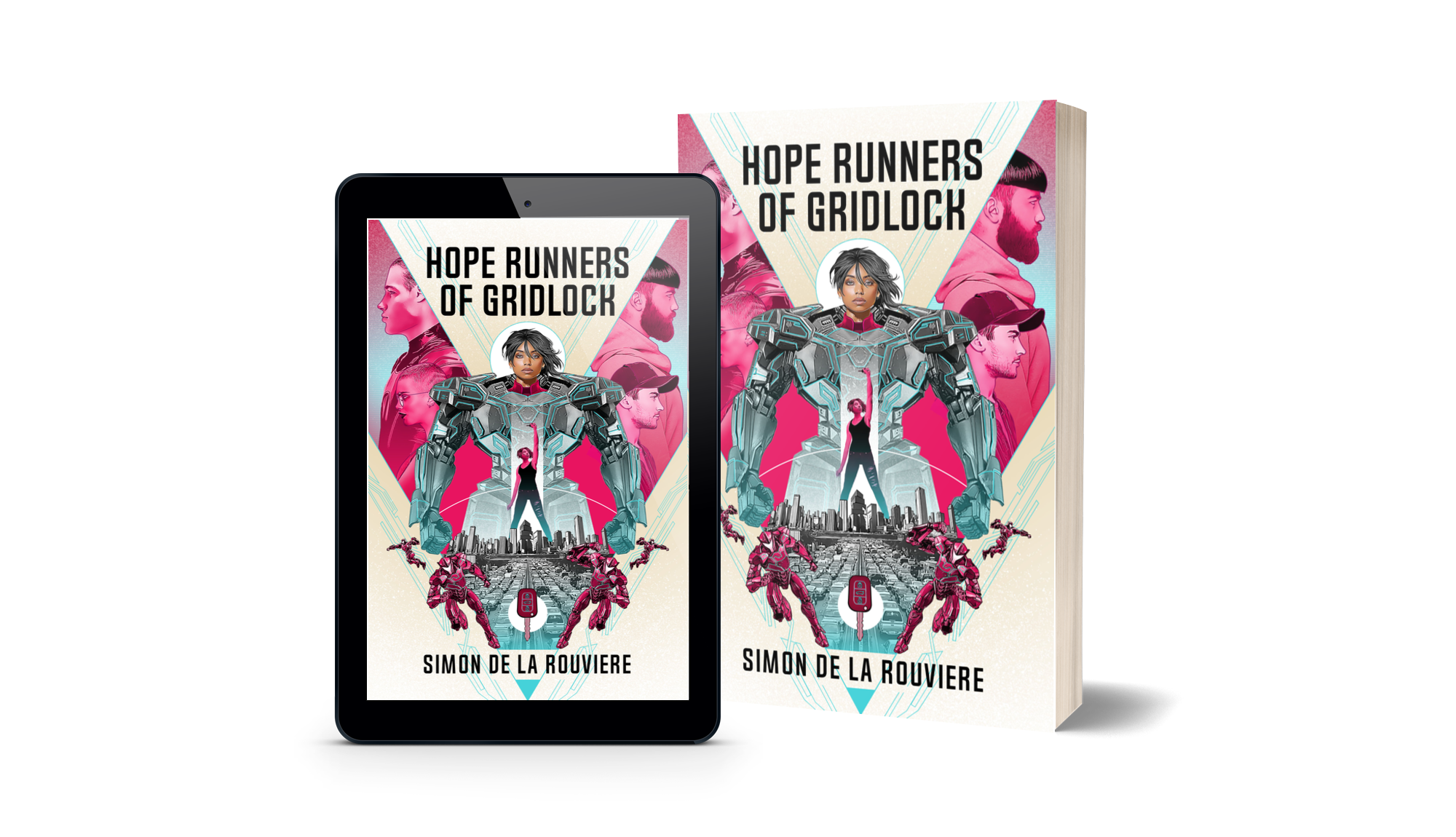
OR: Buy a copy of my self-published debut novel and leave a review!