Welcome to Scenes With Simon. A monthly newsletter about many things. August is about intuition and mastery.
As I started querying my second novel this month, I’m reflecting on the journey. In particular, it’s taken me 400+ days of writing over 3+ years to get here: faaar longer than I originally anticipated.
I can’t guarantee that a subsequent novel won’t also take as long to write, but I’ve definitely encountered a pattern I’ve experienced in other creative domains that at least will make some of it easier in the future: the development of intuition.
I hope. 😅
Intuition?
To me, intuition is:
Intuition is an awareness of how to traverse a territory when you don’t have a map of it. You’ve gone through so many equivalent territories and looked at so many maps of similar territories, that you mostly know where and where not to go.
In writing fiction, it develops as things like: keeping better pace, when a potential plot direction is a dead-end, or better understanding character likeability (it’s about agency). In coding, it’s knowing what a common compilation error likely entails, how complex to structure certain components, or how to find something in the codebase quickly. In game design, it’s things like knowing how to fix incentive systems, spot ways players could do unforeseen things, and what’s actually fun or not.
Over time, you develop a skill that’s a combination of:
knowing when something isn’t good, and
knowing how to fix it, and
knowing how to avoid common pitfalls.
In writing this novel, I went down plot and character pathways that ended up being dead-ends. For example, the protagonist had two strong motivations throughout the novel. Not wrong, but harder to get right. So, I reduced it to one. The protagonist also didn’t have much initial agency. Again: not wrong, but harder to make them likable. Without knowing why, the latter half of the book felt less strong, and upon further inspection, it came down to a plot revelation being revealed too early and thus feeling unearned. These are all examples of things that, on a third go-around at writing a novel, you’d hope you can spot again.
But, as we all know, we believe our intuition will help us for the next project, only to become, lost, again. It happens. Like believing that a refactor of the codebase should be quick, or that tweaking a few knobs in your game design shouldn’t lead to feedback loops that ruin the fun.
In this reflection, however, and comparing it to other creative endeavors over the years, it’s made me wonder again about the creative process as it pertains to mastery. One of those, is the development of intuition.
Levels of Mastery
Having been through various creative domains, I find mastery usually follows the path of:
Knowing what to do. (exploration, doing everything, noise, go big or go home).
Knowing what not to do. (less is more, empty space, minimalism, nuance, subtlety, subtext).
Intuition: When To Do vs When To Do Nothing. (flow, play, getting luckier).
Meta-Intuition: When To Ignore Your Intuition. (release, acceptance, wanderings, Vonnegut’s ‘farting around’).
Mastery 1: Know What To Do
Learning to play a guitar, you learn many chords, scales, and picking techniques. You cover your favourite songs and you attempt to make your own. Amateur garage bands often have the problem of the entire band trying to do too much. After all, as a teenager, you might have just spent your hard earned money to buy an instrument, and of course you’re going to play that thing every second. In writing fiction, it’s learning the tropes: from Hero’s Journeys, Save The Cat beatsheets, reading your favourites with new eyes. Amateur fiction is often marked by the same impetus: a desire for the fiction to do everything. Epic stories, all the descriptions, and a plot that’s as full as a castaway encountering fast food again.
But, these all necessary, because the first part of mastery is about the lay of the land. You’re supposed to do everything so that you can know what can be done at all.
In making maps, it’s adding everything to the legend: usable but very noisy.
Mastery 2: Knowing What Not To Do
This is the garage band eventually using silence as an instrument. Or the writer learning to strip away context in order to leave it up to the reader to interpret.
It’s marked by a focus on doing-one-thing-right, a focus on subtlety, minimalism, and experimentation in form. It’s post-modernism, avoiding genre tropes, empty space, and subtext. It’s taking away features and nice-to-haves in software.
In making maps, it’s taking away irrelevant parts of the legend to make its traversal, easier.
Mastery 3: Intuition
When you’ve constructed and deconstructed, intuition gives us the ability to tell what is necessary without question: whether you should add more, or whether you should add less. It’s the feeling of flow, like jazz musicians resting in the “pocket”, Chess players making moves because “they just know”. You don’t go down wrong paths because you see them less. You’re making less mistakes.
Developing Intuition
Developing intuition isn’t easy, especially in creative domains, because 1) you can be stuck somewhere you don’t know is bad and 2) you might revise something that’s good because your own intuition is bad.
In writing, for example, you initially develop a sense of there being a ‘there there’ to a scene, plot, or character: a feeling that something is wrong without knowing why. Perhaps, by simply consuming you’ve developed taste, and so you can tell without knowing what to do fix it. It’s like arriving to a place and there being a certain smell that others don’t pick up yet. “Do you smell it?” You have to figure out where to look for the smell if you’ve never encountered it before.
Intuition is only developed over time. It’s like cutting a desire path over knowledge. It has to be walked many times.
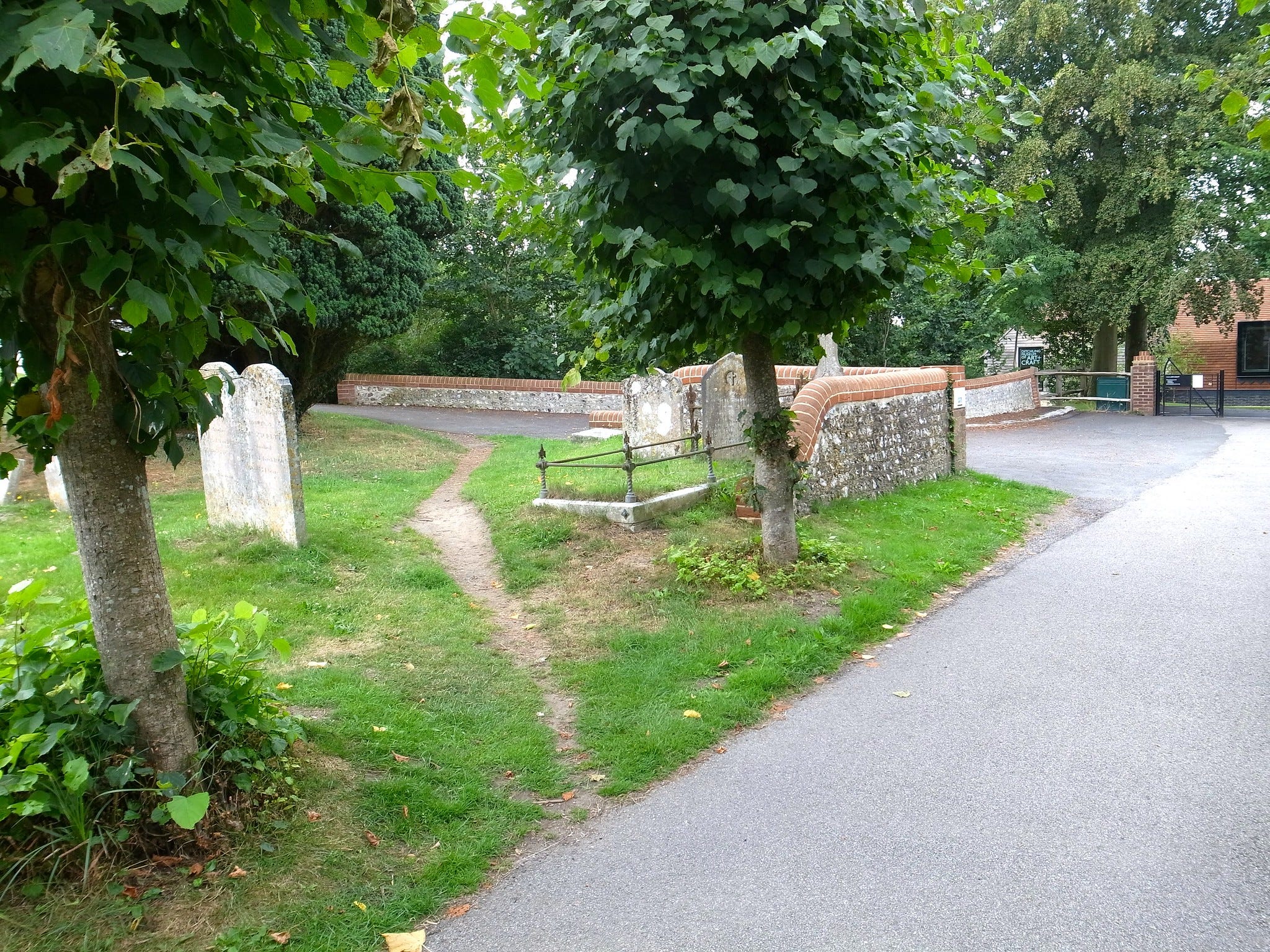
In making maps, it’s encountering new territory and making a very, very good map without thinking too much about it. In some instances, the map doesn’t even need to be created. You can simply traverse it as is.
Master 4: Meta-Intuition
The last one is the hardest. It’s knowing when to ignore your intuition. Intuition is good, but it isn’t perfect. You can become trapped in patterns, habits, and norms that acts as intuition, but only serves to get you to create more of the same.
But, your intuition is molded to your territory. What you’ve really created is the perfection of a map that can’t fit every territory. You’ll be able to walk most of it, but you’d still fail sometimes and you’d still produce works that could’ve been ‘better’.
After mastery of the maps, it’s knowing how to break it such that you can rewire your intuition. It’s knowing how to reconsider a path you have learned to discard without having to re-walk the entire territory again.
There’s an unknown unknown quality to meta-intuition. But, it’s marked by an acceptance that your work requires rough edges without certainty. You have to fuck around. There’s a certain release to it, captured by one of Kurt Vonnegut’s life philosophies.
I work at home, and if I wanted to, I could have a computer right by my bed, and I’d never have to leave it. But I use a typewriter, and afterward I mark up the pages with a pencil. Then I call up this woman named Carol out in Woodstock and say, “Are you still doing typing?” Sure she is, and her husband is trying to track bluebirds out there and not having much luck, and so we chitchat back and forth, and I say, “Okay, I’ll send you the pages.”
Then I go down the steps and my wife calls, “Where are you going?” “Well,” I say, “I’m going to buy an envelope.” And she says, “You’re not a poor man. Why don’t you buy a thousand envelopes? They’ll deliver them, and you can put them in the closet.” And I say, “Hush.”
So I go to this newsstand across the street where they sell magazines and lottery tickets and stationery. I have to get in line because there are people buying candy and all that sort of thing, and I talk to them. The woman behind the counter has a jewel between her eyes, and when it’s my turn, I ask her if there have been any big winners lately.
I get my envelope and seal it up and go to the postal convenience center down the block at the corner of Forty-seventh Street and Second Avenue, where I’m secretly in love with the woman behind the counter. I keep absolutely poker-faced; I never let her know how I feel about her. One time I had my pocket picked in there and got to meet a cop and tell him about it.
Anyway, I address the envelope to Carol in Woodstock. I stamp the envelope and mail it in a mailbox in front of the post office, and I go home.
And I’ve had a hell of a good time. I tell you, we are here on Earth to fart around, and don’t let anybody tell you any different.
A part of this release, this approach to work through ‘farting around’ is also necessary because of our inherent limitations: our territories are (mostly) unique to us and time is short. Take random walks.
Bonus Mastery 5: An Intuition of Perspectives?
One of my more favourite prompts has been to ask LLMs: “What am I missing? Anything I should know about? Any question I should be asking?” That’s a shortcut for cutting into intuition.
Nevermind going: “What would Kurt Vonnegut think about this? John Steinbeck? Agatha Christie? Toni Morrison?”
Tangentially, Venkatesh Rao asks an interesting question in his article, Strange Knowledgeability: encyclopedias provided broad access to facts. LLMs provides broad access to perspectives. A remarkable person continues to ask questions in order to find unanswered questions when all knowledge became accessible. A genius then answers it. With LLMs, thus, it would be ‘genius’ to find unseen or unknown perspectives that an LLM can’t provide.
It’s an apt question as it relates to intuition. In a world where all facts are retrievable, the struggle became the act of knowing what not to know. Or, more broadly, knowing what not to do. Intuition of knowledge develops from going down all the paths of knowledge initially available in a domain in order to reduce the number of future paths you have to walk.
If one draws the same comparison: in a world where all perspectives are possible, the struggle becomes the act of knowing what is not a useful perspective.
If intuition of knowledge was about our own desire to master similar territories, what does it look like to develop an intuition of perspectives? Ways of knowing how not to see the territories?
Lessons From This Novel
Mastery probably doesn’t have to follow each step linearly. For example, I’ve been reading more broadly the past few years, to skill up lvl 1. I want to write more short stories soon to practice lvl 1 and lvl 2. As for intuition of what makes a good story, ensuring that I hopefully don’t take 3 years to write a novel? I think right now, I’m banking more on getting lucky than relying on the fact that I know what I’m doing (😂).
As for lvl 4. I’ve definitely been ‘farting around’ a lot more and enjoying more enfilade-shape life. As a writer, I think it’s imperative that you also joyfully do much and nothing at all.
Welcome!
In this issue of Scenes With Simon, there’s another essay, a few snippets from the web, and updates on what I’ve been up to!
Touching Time
I adored this essay from Venkatesh Rao on what it actually entails when we desire to “touch grass”. The deeper essence is about anchoring oneself to an awareness of the scale of time. We’re so deep in the world of symbols that we’ve become too unmoored from our embodied presence in the real world.
What I mean by touching time is this: A cognitive-sensory experience that has temporal depth in the frequency domain, with time constants ranging from seconds to millennia available to the attuned awareness to attend to. “Infinity in an hour” as William Blake put it.
Many experiences are temporally shallow. A well-manicured lawn, for example, is largely a war of short time constants between fast-growing grasses and roughly equally fast-growing weeds. Deeper, slower dynamics, as well as faster, shallower ones are present, but harder to become aware of and attend to. Hiking through a gorge with exposed strata, on the other hand, the depth of time is in your face. Time is thick enough to cut with a knife.
…and later:
Touching time is how you bridge the divide between the two.
We are living through times when Spaceship Earth is maneuvering extraordinarily aggressively through the dungeon dimensions of hyperdimensional spacetime, even though in the three dimensions we can see, it is continuing its age-old orbit around the Sun, marking time at one year per orbit.
We all feel it in our guts. To retreat to touching grass is to surrender to a sense of the maneuverings of history being unsteerable. To retreat in the other direction to make endless maps is to mistake your comforting fictions for vast and limitless steering authority.
But to touch time is to feel your way into whatever steering authority you do have, without needing to retreat from everywhere you have none.
I’ve been an advocate of “touching grass” and going offline on this newsletter for a few years now. For various reasons: from fostering healthier mimetics and pluralism:
It’s imperative that we situate the public algorithmic feeds as more equal to the rest of our information ecology. It’s not the beginning and end. It means going back to using group chats. But also, simply going offline again and investing in local communities. It’s not saying we should toss out the public web and algorithms. But, it’s one part of the ecology, not THE ecology.
The slow world, the rural world, is heavy with physical reality. You’re closer to a deeper well. The inverse are cities: shallower physical wells where digital reality has taken primacy over its physical reality. And due to relativity, if you are in the slow, physical heavy world, the city moves at an immensely and unfathomably fast pace. If you are in the city, the slow world moves even slower. So unfathomably quiet, slow, and heavy with time, space, and stars. From the slow world, we only really get a glimpse of the fast city when we use our smartphones as portals, either for remote work: exporting its fast wealth to the slower world, and/or getting access to information.
Becoming more aware and resting in “time” is a great way to swing the pendulum away from other modes of time that are more prevalent right now.
Snippets From The Web
Designing Carnival Time
Love unique takes on urbanism. This one by Sachin on stadiums and what he coined as ‘carnival time’.
Based on these design characteristics (boundary and purpose), stadiums have high or low permeability to carnival time, and either high or low archival density. High permeability indicates a porous boundary and an experience embedded into daily life. Low permeability indicates a harder, brittle boundary and a lack of embedding into civic life (you might not even know what’s happening). High archival density is the result of an accumulation of local memories (both personal and civic) alongside the evolving history of teams and heroes.
Smartphone Slab
I think I need one.


Thinking Improves Immune Response?

Cool Building For the Month


More Swiss Apartment Planning
Ever since I wrote about enfilades, I keep getting more of this stuff in my feeds. Love it.


I love Long Art
The piece, an initiative of the John Cage Organ Project Halberstadt, began on Cage’s 89th birthday on September 5, 2001, with 18 months of silence. After nearly twenty five years, the performance is now four percent complete. This most recent chord change, the seventeenth in the piece, saw the preceding C, D-flat, D-sharp, E, A-sharp and E chord turn into a C, D-flat, D, D-sharp, E, A-sharp and E, with an additional D note. The sixteenth chord change was observed in February 2024, over 900 days ago. Individual pipes are manually added or removed from the organ to change chords, and the sustained sound of the piece is produced through an electric blower system that forces air into the pipes. “Organ² / ASLSP – As Slow as Possible” will conclude on September 4, 2640.
The Data Mines
Google bought Sprit Airlines’ enterprise data and Thomson Reuters trained a custom model on decades of legal/tax data. I feel like this trend will accelerate as LLMs have practically ingested the entire public web by now. It will increasingly be what’s not been found yet. I do wonder eventually what the marginal value of new data will be to models.
What I’ve Been Up To
Creating:
✍️ Writing - Ramping Up Queries for Novel #2
See above!
I finished proofreading this month and sent one (1) query letter to dip my toes back into it. Feeling very good about the book.
Ready to start ramping it up in the next week!
Have just finished revisions (for now), I enjoyed Lincoln Michel’s take on it.
If I have one bit of revision advice to offer—once you have a full first draft, aka the most important step—it is to work from macro to micro. Get the full skeleton of structure in place first. The right number of narrative limbs and story appendages all set in their proper spots. Then proceed to worry about the chapter organs and scene viscera. Once those are all connected, only then should you focus on stitching up small wounds and bandaging blemishes on the skin of sentences. That is to say, don’t spend your time polishing paragraphs and reworking scenes if those parts are going to be hacked off and replaced. That can make the whole process more dispiriting. It also makes it harder to do the necessary hacking and restitching. Easier to kill a darling when it’s half-dead already.
At least, that’s what works for me.
I suppose I have one other bit of advice, which is that the only way I know how to revise is to get your hands in the guts! Get messy. Palpate and squeeze. Slosh around, elbows deep, in the story itself. This is when the inspirations strike like lightning. This is when the creature begins to thrum with life.
Hard agree on just getting some story out there, back to front first, before starting to cut, prune, and focus on quality. The last paragraph feels very lvl 4 mastery. ;)
👨🏻💻 Coding
I’ve been working on a daily word game, vibecoding it on the side. It’s practically done. It’s been really fun to play/design. Hoping to release the first version next month. :)
My first proper foray into coding was making puzzle games as a teenager. I’d love to get back to more game design aided by coding tools that can help spin them up quicker. Bite-sized puzzle games for friends and family is a great category for this.
Consuming:
📺 Watching
Been quite a piecemeal month for watching various TV shows. Trying new ones here and there. Instead of talking about all of them, if I go deeper in them, I’ll share it here.
Mando and Grogu
A popcorn movie. I love Star Wars, but find it hard to feel motivated for the Mando/Grogu side of it. Still, entertaining.
White Lotus S1+S2
A rare rewatch for me. I rarely rewatch, reread, replay, etc. But, went back and watched S1 + S2 of White Lotus and they’re still huge gems for me. Particularly S2 of White Lotus. Struck lightning in a bottle with that season.
Slow Horses S1
I tried watching it a few years ago and didn’t catch me. But recently gave it a go again. Really enjoyed the first season. Looking forward to where it goes! :)
🏃 Running
Got a half-marathon coming up again. Decided to ‘rest’ a bit this summer, only keeping up with maintenance/fitness running. Nothing serious. But with a race coming up, I had no idea what my longer distance fitness was. After the first long run since April, felt pretty strong. Moreso than I expected. So, happy about that! Looking forward to the race. Hope it gets cooler by the end of Sept! 🤞
🎶 Listening
hey, nothing - Hound
One of the more exciting young bands out there today. So good.
Suki Waterhouse - Back in Love
Such a dreamy song. Recently, I’ve been really enjoying the vibes of: “the hood-down, California roadtrip, female-led, floating energy” genre.
Friendly Fires - Lose All Your Friends
Great to hear they’re launching a new album. Great indie electronic dance track!
That’s it for August, friends. Hope you get to enjoy a lovely sunset!
Simon
Like what I write? Please consider becoming a patron below ($5/month):
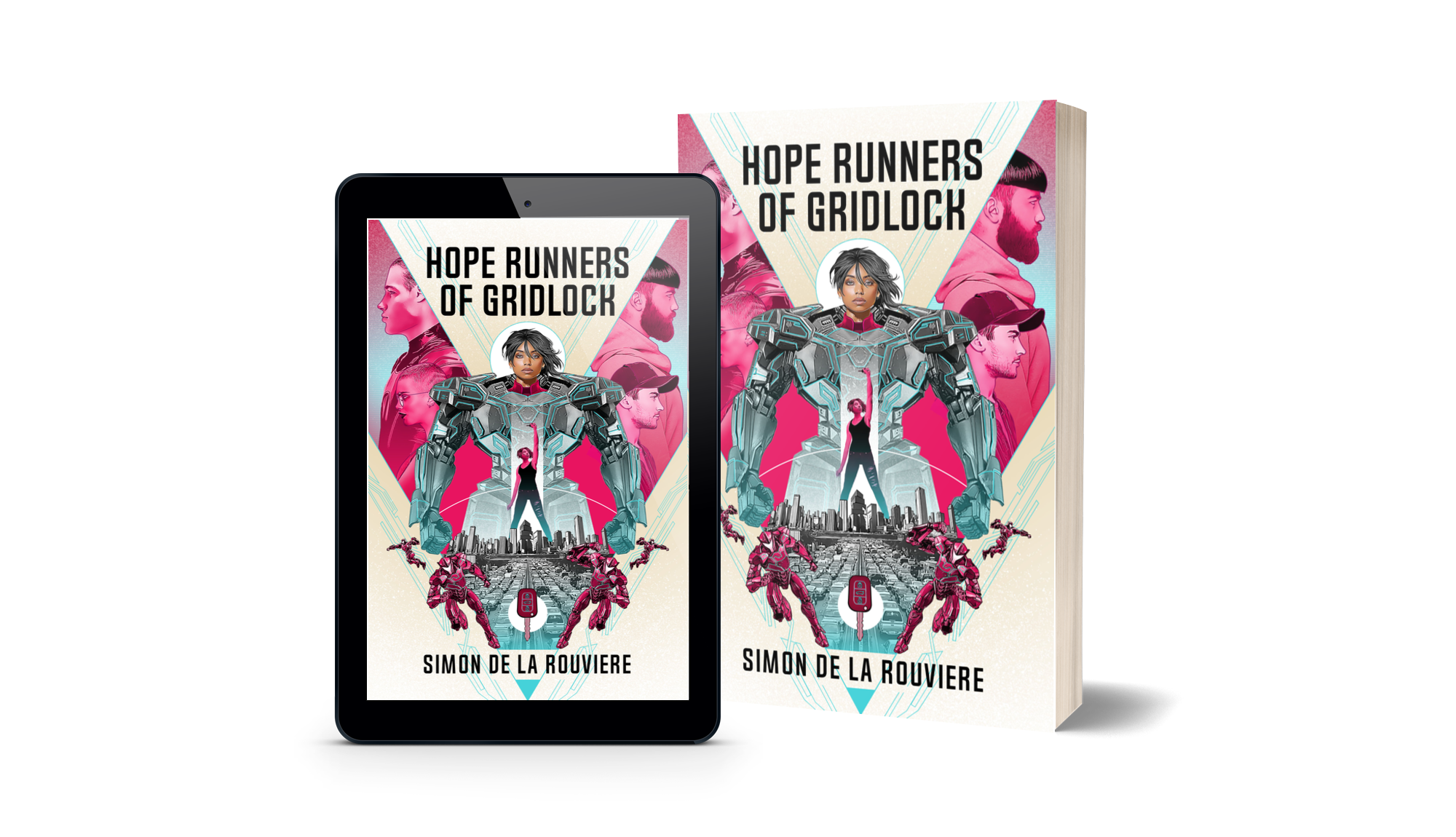
OR: Buy a copy of my self-published debut novel and leave a review!